At a Glance
- New Jersey’s law isn’t traditional EPR: Instead of using a Producer Responsibility Organization, the state puts registration, reporting, and recycled-content responsibilities directly on covered manufacturers.
- PCR requirements increase over time: The rigid plastic container requirement began at 10% and increases in stages, eventually reaching 50%.
- Food packaging has more time: NJDEP extended the food-packaging exemption through December 31, 2029, but covered manufacturers still have responsibilities to prepare for what comes next.
- Preparation matters now: Food businesses should determine whether they’re covered, understand their packaging’s PCR content, maintain documentation, and work with suppliers to prepare for future requirements.
DISCLAIMER: This document is designed as an introduction to New Jersey EPR laws and contains summary information. The information provided in this document does not constitute legal advice and is not a substitute for the advice of an attorney. All liability with respect to actions taken or not taken based on the contents of this document is expressly disclaimed.
There’s no other state like New Jersey. It’s often called the Diner Capital of the World. And it’s home to one of America’s longest-running food fights: Is it “pork roll” or “Taylor ham?” (We’re a packaging company. We’re staying out of that one.)
So it shouldn’t surprise anyone that New Jersey also does packaging laws its own way. And if you sell food in rigid plastic, its rulebook may include your name.
You already have plenty on your plate. Food safety, shelf life, labor costs, and making sure your salad arrives looking like a salad. Now your customers are asking about recycled content. You shouldn’t need a law degree to ship a clamshell.
We get it. We’ve been providing packaging solutions to fresh food businesses for over 55 years, and we track these laws closely so our customers can focus on food, not fine print.
In this article, we’ll cover what New Jersey’s laws are, who they apply to, how much recycled plastic content they require, what happens if you fall short, and how to prepare. Now, let’s get ready to hit those shore points!
Is New Jersey’s Recycled Content Law the Same as EPR?
 Not quite. People often lump it in with Extended Producer Responsibility (EPR), but New Jersey marches to the beat of its own drum.
In states like Oregon, businesses pay fees by the pound through a Producer Responsibility Organization (PRO). New Jersey skips the middleman. You deal directly with the state’s Department of Environmental Protection (NJDEP), which handles registration, reporting, and enforcement.
The Recycled Content Law was signed on January 18, 2022. Instead of per-pound fees, covered companies pay a flat $1,000 annual registration fee. Sell one container or ten million, the fee is the same. It’s the rare case where buying in bulk doesn’t get you a discount.
Who Has to Follow New Jersey’s Recycled Content Laws?
The laws put responsibility on the “manufacturer,” but the law’s definition is broad. It includes companies that make empty rigid plastic containers sold into New Jersey. It also includes brand owners whose products are sold in the state in rigid plastic, unless a licensee agrees to take on that responsibility.
For food pros, that’s the key part. If your branded cookies, salads, or berries in rigid plastic end up on New Jersey shelves, this law may apply to you.
Businesses that make, package, and sell products at a single location, like a corner deli or cafeteria, are not considered manufacturers. The state isn’t coming after the neighborhood butcher.
The laws also cover all rigid plastics, not just PET. If it’s rigid and plastic, it’s in the club.
How Much Recycled Plastic Does New Jersey Require?
Yes, 50% by 2036. That’s a big number for an industry where food-grade PCR is already hard to find. Looks like we’re going to have to wait and see if this is possible.
Are Food Containers Exempt From New Jersey’s PCR Requirements?
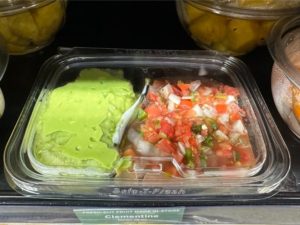 For now, yes. Food packaging’s original exemption was set to end in January 2027. In a September 2 memo, NJDEP extended it to December 31, 2029, saying food-safe PCR isn’t yet available at the scale needed. In other words, the state noticed what food businesses already knew.
A few catches: The extension doesn’t cover beverage containers or non-food packaging. The state has also reserved the right to extend it again.
Here’s the part to circle on your calendar. The exemption pauses the clock, but it doesn’t reset the schedule. Under the current timeline, New Jersey’s food-packaging exemption expires on December 31, 2029, just as the state’s 30% post-consumer recycled content requirement takes effect in 2030.
It’s a head start, not a free pass.
Even while exempt, food packaging manufacturers are still expected to register each year. New Jersey wants to know who’s on its radar.
What Happens If Your Packaging Doesn’t Meet New Jersey’s Rules?
The bigger risk may be your own customers. Retailers and distributors don’t want fines either, so they’re already asking suppliers to prove compliance. Companies that can’t show it may find buyers shopping elsewhere.
The impact also reaches past state lines. A distributor in Pennsylvania might ship your product across the river. That’s why many companies will aim to meet New Jersey’s numbers across their whole product line.
How Can Food Businesses Get Ready for New Jersey’s 2030 Deadline?
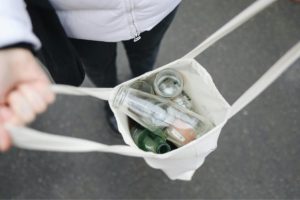 You have time, and getting ready comes down to a few simple moves.
First, figure out if you’re covered. If you’re a brand owner selling food in rigid plastic into New Jersey, you probably are. Next, make sure you’re registered with NJDEP, even while exempt.
Then, talk to your packaging supplier. Ask how much PCR is in your containers today and what their plan is for 2030. The law allows two ways to comply: A company-wide average that meets the target, or a supply chain dedicated only to New Jersey. New Jersey-only products sound tidy until you try it with millions of containers, so a strong overall average is usually the practical path. Ask for clear documentation too, so the numbers you report are numbers you can stand behind.
It’s the Jersey Way!
With the right partner, New Jersey’s law becomes one more thing handled, not one more thing hanging over your head. Your customers get answers, and your food keeps reaching shelves across the Garden State.
Have questions about your packaging and New Jersey’s requirements? Reach out to our team, and we’ll help you plan for what’s ahead and promise not to argue about what those pork sandwiches are called.
Interested in finding out more about packaging sustainability? Visit our Learning Center today and explore a wide variety of topics.
DISCLAIMER: This document is designed as an introduction to New Jersey EPR laws and contains summary information. The information provided in this document does not constitute legal advice and is not a substitute for the advice of an attorney. All liability with respect to actions taken or not taken based on the contents of this document is expressly disclaimed.