At a Glance
- Recent foodborne illness outbreaks have highlighted why fast, accurate traceability matters more than ever.
- FSMA 204 may be delayed until 2028, but businesses can still benefit from preparing now.
- Traceability often breaks down during handoffs between growers, packers, distributors, retailers, and foodservice businesses.
- Packaging helps connect products to critical traceability data through lot codes, barcodes, and other identifiers.
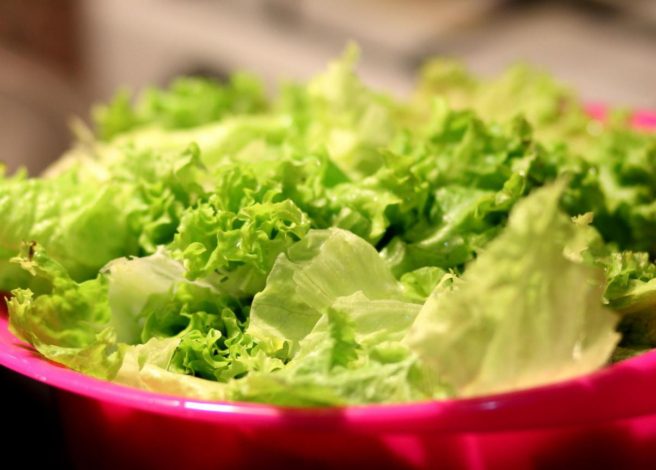
This should come as no surprise to anyone: Lettuce had a rough summer in 2026. (Ask any septic system.) So did jalapeños and shell eggs.
Per the CDC’s August 20, 2026 outbreak update, a multistate Cyclospora outbreak linked to iceberg lettuce served at Taco Bell locations has sickened more than 10,900 people in 17 states, hospitalized over 450, and contributed to two deaths in Michigan.
Add ongoing Listeria investigations happening around the same time, and suddenly every breakfast and salad bar in America looks a little suspicious. Food business professionals everywhere are asking the same questions: How did we get here, and how do we keep it from happening again?
This week, we sat down with Wiggs Civitillo, Founder and CEO of Starfish. This technology company connects different traceability systems across the food industry. Having previously built and led IBM Food Trust, the world’s largest traceability network, he has watched companies wrestle with traceability up close and knows exactly what’s on the line when it goes wrong.
We know a thing or two about this world ourselves. For more than 55 years, we’ve supplied packaging to fresh food businesses and watched food safety become a front-page headline. Below, we’ll break down why traceability matters more than ever, where it quietly falls apart, and how packaging ends up doing more heavy lifting than it gets credit for.
Why Are There So Many Food Recalls Right Now?
 It’s less one big problem than several smaller ones showing up to the party at the same time (and they’re not bringing a desirable gift for the party host). Several unusually large and highly visible outbreaks have hit this year, when funding and staffing pressures have strained parts of the nation’s food-safety surveillance system.
Meanwhile, a 2026 survey found that 35% of small and midsize businesses changed suppliers because of tariffs during the previous 12 months, with cost increases being the leading reason. “That combination puts a lot of pressure on the system,” Civitillo said. None of these factors invented food safety problems out of thin air. They just made the cracks a lot harder to look past.
What Is FSMA 204, and Why Was It Delayed?
FSMA 204 is the part of the 2011 Food Safety Modernization Act designed to speed up recalls by requiring companies to track key product data, instead of relying on a shrug and a supplier’s word. It originally had a compliance date of January 20, 2026. Then, per the FDA’s Food Traceability Rule page, the agency proposed extending the compliance date by 30 months to July 20, 2028. Congress subsequently directed the agency not to enforce the rule before that same date.
The rule itself hasn’t changed, only the deadline, which is a bit like postponing a fire drill and hoping the building cooperates. The outbreaks have also renewed attention on the value of faster, more interoperable traceability, regardless of when enforcement begins.
Where Can Traceability Actually Break Down?

Rarely inside a single company’s own four walls. Our expert said that the handoffs between companies, grower to packer, packer to distributor, distributor to retailer, are where the wheels may come off.
Everyone runs a different system; some still work off paper, lot codes get reused or dropped, and products get commingled without tracking where they actually came from.
Distributors have it especially rough: Breaking down pallets and mixing lots makes scanning every unit difficult. The result can be a lot of good intentions that never quite add up to a usable trail.
What Do You Get From Traceability Beyond Just Checking a Compliance Box?
“Compliance is really the floor, not the ceiling,” Civitillo told us. The real payoff shows up in places most companies don’t expect:
- Speed and precision in a crisis. A strong program means a targeted, surgical recall instead of a broad one, which protects both consumers and revenue.
- Stronger partnerships. Retailers and foodservice operators increasingly ask for this data before anything goes wrong, and companies that hand it over cleanly become easier partners to work with.
- Better operations. Clean, structured supply chain data reveals inefficiencies and shrink you didn’t know existed.
- Insurance readiness. Traceability and recall preparedness can factor into how insurers evaluate product-recall risk. Some insurers specifically request traceability programs as part of the underwriting process.
What Role Does Packaging Play in Traceability?
 Packaging, Civitillo explained, is where the digital and physical supply chains actually meet. All the GS1 identifiers, lot codes, and barcodes think of packaging as the pin holding the trail together as product moves from field to shelf.
Without clear, scannable data on the package, there’s no way to reconstruct where something came from or where it went.
It matters on the consumer side too: A package that allows for labeling with a scannable QR code can eventually tell a shopper not just a product’s backstory, but whether it’s part of an active recall, which beats finding out the hard way.
What Should Food Business Professionals Do Next?
Nobody ever wants to hear that any food can cause something “explosive” to expel from their body. It’s a pretty aggressive adjective (the mental imagery alone!). But it’s nearly impossible to prevent every outbreak.
The summer of 2026 made one thing obvious: The businesses that come out ahead aren’t the ones that got lucky; they’re the ones that already knew where their product came from. That means capturing lot-level data from every supplier, digitally if you can, since paper trails don’t hold up at retail speed.
It means treating compliance as the starting line, not the finish, since the real payoff is faster recalls, stronger partnerships, and fewer surprises at renewal time with your insurer. And it means packaging that actually carries the data it’s supposed to, so the trail doesn’t go cold the moment a pallet gets broken down.
Civitillo summed up why this matters with a simple comparison: Good traceability is like keeping a fire extinguisher behind glass. You hope you never need it, but you’re glad it’s there when you do. That’s the gap companies like Starfish are built to fill: Keeping trading partners connected before a recall hits, not after. For food businesses, the question isn’t whether the next outbreak happens somewhere in the supply chain. It’s whether you’ll know your part of the story when it does.
Interested in seeing how companies like Starfish can improve traceability programs? Reach out to them directly today.
And if you want more insights into food industry trends, visit the Inline Plastics Learning Center and explore a wide variety of topics.