At a Glance
- Packaging is the silent salesperson — clear, clean presentation builds trust and drives impulse purchases, while messy or opaque packaging kills them.
- Cheap packaging (like bags) often costs more in the long run through shrink, lost sales, poor presentation, and reduced customer trust.
- Clear, rigid containers that have visible tamper evidence and tamper resistance often improve shelf life, reduce labor, deter theft, and signal food safety to customers.
- The biggest missed opportunity in C-stores is merchandising — consistent, visible, well-presented packaging directly impacts whether customers buy or pass.
If you’ve ever had a hankering for something while you’re on the go, it should come as no surprise that convenience stores have quietly become serious food destinations. Travelers, commuters, and lunch-break regulars are increasingly reaching for fresh grab-and-go options — and they have many to choose from.
Convenience stores (or “C-stores”) that have moved beyond the days of sad, soggy, mystery sandwiches in bags are already seeing the benefits: Cleaner coolers, more loyal customers, and grab-and-go programs that practically sell themselves.
For the C-stores still on the wrong side of this equation, the culprit is often hiding in plain sight. It’s the packaging. More specifically, it’s the wrong packaging…and the wrong way of thinking about it.
Inline Plastics has been providing packaging solutions for food businesses, including convenience stores, for over 55 years. We have seen what makes a product sell, and what makes the experience…well, inconvenient (see what we did there?).
This article breaks down what’s actually driving (or inhibiting) grab-and-go success in C-stores, what customers are silently judging every time they reach into that cooler, and how a smarter approach to rigid plastic containers can change the entire equation.
Why Does Presentation Matter So Much in Convenience Store Grab-and-Go?
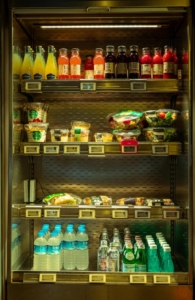 We have all, at some point, seen a refrigerated case that looks like it lost a fight with itself. Leaking bags, foggy film seals, a chicken salad that’s turned a color you can’t quite name. Nobody’s grabbing that.
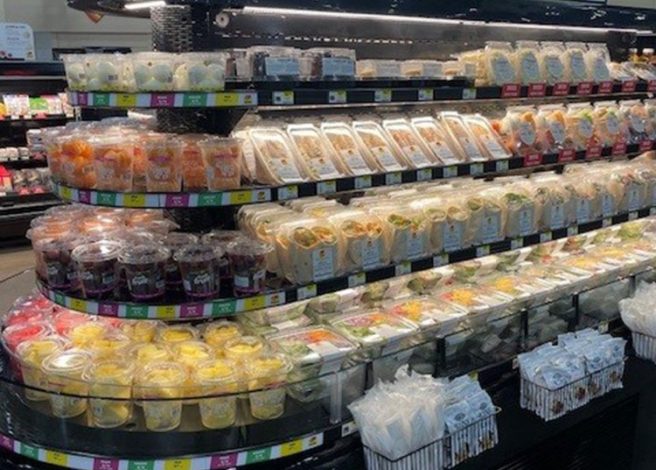
Presentation is the silent salesperson in your cooler. A clean, uniform shelf of clear containers signals freshness, care, and quality even before a customer reads a single label. When items are packed in clear, rigid containers and arranged consistently, the cooler invites people in. When they’re tossed in opaque bags or white film-sealed trays where you can’t see what you’re buying? Customers may hesitate. And hesitation is the enemy of impulse purchases.
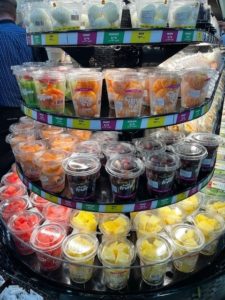
Clear containers do something bags simply can’t: They build trust. When a customer can see exactly what they’re getting — every cucumber slice, every perfectly cubed piece of melon — they feel confident in the purchase. That confidence turns browsers into buyers. And that’s a turn we can all get behind…unlike the turning of that aforementioned chicken salad (yikes!).
Are Bags Really That Bad for C-Store Food Packaging?
 Let’s look at this objectively.
Bags have their advantages: They’re flat, cheap to ship, and don’t eat up much storage space, which matters a lot when back-of-house square footage is precious. But the trade-offs add up fast.
You can’t see through most bags. You often can’t reseal them. They can look sloppy on a shelf, especially once a few have been shifted around by browsing hands. And if a customer gets to their car and discovers the sandwich inside looks nothing like what they expected? That’s not just one lost sale; that’s a customer who may not come back.
Operators who rely heavily on bags may think they’re saving money on packaging. They’re often spending it somewhere else: On shrink, markdowns, or the slow erosion of customer trust.
What’s the Real Cost of Cheap Packaging in a C-Store Setting?
It’s easy to look at packaging as just a line item, but that view misses the bigger picture. The real question isn’t “What does this cost?” — it’s “What is your return on investment?” A container that is a few cents more than a bag can reduce shrink and keep shelves cleaner during peak hours.
Operators who treat packaging as an investment start to see where the returns show up. It can extend shelf life. It improves presentation with less labor. And in an environment where theft drives real losses, adding tamper-evident and tamper-resistant features helps deter interference, makes tampering immediately visible, and reduces the risk of compromised product making it back into the case.
Tamper-protected (especially tamper-evident) containers also carry a credibility signal that customers notice, even if they can’t articulate it. It communicates: We took care of this. The food is safe. No bandits here. That matters when food safety is a top priority.
How Does Shelf Life Factor Into C-Store Packaging Decisions?
 This is where it gets interesting, because not all C-stores are working from the same playbook.
Some operators pack fresh in-house every day; we’re talking about cutting, filling, and stocking with the goal of moving everything within one to two days. For these stores, shelf-life extension may not be a top priority; freshness and turnover are. Packaging needs to support that fast cycle without sacrificing presentation.
Other operators source pre-packaged products from processors and need containers that protect and present items across a longer window. These stores often care deeply about features like extending shelf life.
The point is that there’s no one-size-fits-all answer, but in both models, packaging plays a direct role in whether the product sells or gets pulled. Operators who choose containers that support their specific model, rather than defaulting to whatever’s cheapest, end up with better outcomes on both ends of the shelf-life spectrum.
What Are the Biggest Missed Opportunities in C-Store Grab-and-Go Programs?
Merchandising. Full stop.
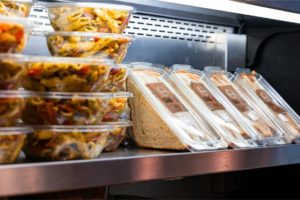
If you walk into some of the better-run grab-and-go programs in the country, the cooler should look like a curated deli case with uniform, clear containers, consistent sizing, and clean shelves. It doesn’t just look good — it moves product.
Conversely, if you walk into an underperforming program, you may find a center-aisle refrigerator that looks like nobody thought too hard about what goes where or how it looks from three feet away. You could see a mix of packaging types, bags crammed together, and items with unclear contents. Even good food can look uninviting in the wrong container.
The best C-store food programs understand that the container is part of the product experience. It’s the first thing a customer touches. It shapes what they think about the food inside before they’ve taken a bite.
What Should C-Store Operators Be Asking About Their Packaging?
If you’re running a grab-and-go program and packaging hasn’t been a top-of-mind conversation lately, here are the questions worth sitting with:
- Does your cooler look inviting to someone who’s never shopped there before?
- Can customers clearly see what they’re buying, and does it look good?
- Are you losing product to leaks or presentation failures?
- Are you thinking about packaging as a cost or an investment?
- Is your packaging preventing your product from being tampered with?
- Does your packaging support the shelf-life model you’re actually running?
The answers often point in a similar direction: Taking a more intentional approach to using rigid, clear, tamper-evident, and tamper-resistant containers than many operators currently do.
C-ing The Difference
 Grab-and-go is one of the highest-margin, highest-potential categories a convenience store can run. But margin potential only becomes actual margin when customers reach in, feel confident, and buy. That decision — to reach for or pass on — happens in a fraction of a second, and packaging is doing a lot of the convincing.
The C-stores winning in food aren’t necessarily buying the fanciest ingredients or running the most sophisticated supply chains. Many of them are simply presenting their product better: Cleaner shelves, clearer containers, and a cooler that looks like someone cares and is intentional.
That’s surprisingly achievable, and it starts with rethinking what a package is actually worth.
Are you curious about what containers can improve your grab-and-go presentations? Browse our digital catalog or talk to a dedicated advisor today.