
Listen to the audio recording of this blog post or check out the featured Podcast about this topic.
At a Glance
- Packaging failures often point to bigger system issues — not flaws in the container itself.
- Small temperature shifts can mimic defects, causing fogging, leaks, or spoilage.
- Handling and equipment inconsistencies play a major role in performance.
- Collaboration and real-world testing solve problems faster than blame ever will.
Here’s an uncomfortable truth: When food packaging takes the heat for product failures, it’s often just one piece of a much bigger puzzle.
The calls still hurt, though.
“Your containers are leaking.”
“The berries are going bad too fast.”
“Everything’s fogged up and looks terrible.”
It’s enough to make you question your entire product line and wonder if you should have gone into a simpler business — like rocket science.
But before you start redesigning everything or firing up an all-hands investigation, take a step back. Sometimes the issue isn’t the container itself — it’s what’s happening around it.
At Inline Plastics, we’ve spent decades partnering with retailers, distributors, processors, and food manufacturers. We’ve seen it all: The good, the bad, and the truly bizarre. And one thing’s clear — packaging performance depends on more than just design. Factors like temperature fluctuations, equipment inconsistencies, and handling practices can all affect how packaging performs once it leaves the line.
Our goal isn’t to point fingers — it’s to uncover the full story. Together, we can diagnose what’s really going on and build stronger, smarter packaging systems that perform consistently in the real world.
The Perfect Storm of Assumptions
 When a food product fails on the shelf, packaging is often the first suspect. It’s visible. It’s tangible. And, on the surface, it seems like the obvious culprit.
If watermelon chunks are swimming in liquid at the bottom of the container, it’s easy to assume something went wrong with the design. That logic tracks — until you dig deeper.
Your product travels an epic journey before it ever reaches the consumer — think Finding Nemo, but with refrigeration checkpoints and forklifts. Each stop along that journey introduces new variables that can influence performance, and many of them have nothing to do with packaging design or quality.
Let’s say your product starts at the packaging facility, moves to a distribution center, travels on trucks with different temperature controls, gets stocked in retail coolers, maybe sits under heat lamps in prepared food sections, and endures countless consumer interactions before purchase. Every step adds an opportunity for change — and sometimes, for trouble.
Even when the packaging performs exactly as intended, those variables can create conditions that mimic failure.
The Temperature Trap
Here’s the most frequent culprit disguised as a packaging flaw: Temperature control issues. Retail refrigeration systems are like the drama queens of the food world — they demand attention and precision. Even a few degrees of deviation can spell trouble, causing fogging, leaks, or early spoilage. You can think of refrigeration systems as the dramatic and incredibly sensitive character in your product’s narrative.
When products start breaking down or fogging up, it’s tempting to blame the container. But in many cases, the issue stems from inconsistent refrigeration or improper airflow. The same packaging that struggles in one store often performs flawlessly in another with properly calibrated equipment.
That inconsistency is a clue — not a condemnation. Before diving into time-consuming and costly redesigns, it pays to rule out environmental factors like temperature, storage, or handling. Otherwise, you risk solving the wrong problem — and paying for it twice.
(And yes, we see you, refrigeration systems — you temperamental fiends.)
The Human (& Machine) Factor
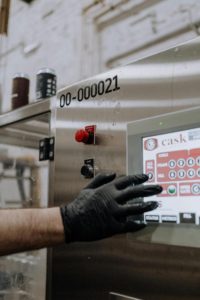 Beyond temperature, people and equipment can both introduce challenges. Every touchpoint — from filling to sealing to stocking — shapes how packaging performs.
Training levels vary, procedures shift, and consumers, well…they have minds of their own. Ever watched someone pick up a clamshell, open it, sniff it, drop it, and put it back? Multiply that by hundreds of shoppers a day. That’s a lot of “field testing.”
On the processing side, automation brings its own quirks. De-nesters can grab too many containers at once. Fill lines can run too hot, too cold, too fast, or too slow. Sealing machines can slip out of calibration. The result? A performance issue that looks like a packaging defect but really stems from process variation.
Routine audits and calibration checks aren’t just good practice — they’re your best defense against wild goose chases and costly redesigns.
And for companies with decentralized purchasing? The plot thickens. When different locations source different suppliers or materials, performance can vary dramatically. Testing and consistency become even more critical to keep the data — and the drama — to a minimum.
Test. Test. And Test Again.
The best packaging isn’t just designed — it’s proven.
Yet many testing programs only evaluate the container, not the full environment it faces. True validation should replicate the product’s entire journey: Temperature shifts, storage time, handling stress, and even consumer interaction.
Real-world testing might include running packages through extended shelf-life studies, leaving them under heat lamps, or simulating frequent handling. It’s not about creating indestructible packaging — it’s about knowing the boundaries so you can operate confidently within them.
After all, you can’t know how much your packaging can handle unless you test against what it’ll actually face.
Building Diagnostic Partnerships
 When a packaging issue pops up, it’s easy to fall into the blame game — retailers point to suppliers, suppliers defend their specs, and valuable time gets lost. But the most successful teams take a different path: Investigation first, assumptions later.
When a partner calls about a problem, the most productive response isn’t “It’s not our fault.” It’s “Let’s look into this together.”
That might mean walking stores, checking temperatures, observing how products are stocked, or comparing results across locations. Each finding helps both sides see the full picture — not just the symptom.
This approach saves everyone time, protects reputations, and leads to better long-term solutions. When you view troubleshooting as a shared mission, every challenge becomes an opportunity for improvement.
Working Together Effectively
Packaging conversations can be delicate. Nobody wants to hear that the issue might be outside their control — even when that’s technically true. The key is empathy and partnership.
Suppliers who understand retail and processing environments bring more to the table than product specs. They bring context. They know which questions to ask, which conditions to test, and how to present results in a way that feels collaborative, not confrontational.
When both sides focus on learning instead of blame, solutions come faster — and relationships grow stronger.
Moving Forward Together
The food industry thrives on partnership. When something goes wrong, the goal isn’t to assign fault — it’s to fix the issue and strengthen the system.
Sometimes that means tweaking packaging. Other times, it means adjusting operations or improving storage conditions. Either way, it starts with curiosity and shared problem-solving.
Next time you see a packaging issue, resist the urge to assume. Instead:
- Check temperatures
- Observe handling
- Compare performance across locations
- Ask what’s really happening behind the scenes
You may find that the packaging is doing its job exactly as designed — and the fix lies elsewhere in the chain. That’s not a setback; that’s progress. Because when you uncover the real cause, you can make improvements that last.
Are you interested in learning more about plastic food packaging and what affects shelf life? Visit our Learning Center today!

