
At a Glance
- Eco-friendly packaging decisions require looking beyond marketing claims — some “compostable” options contain hidden plastic linings that contaminate compost and may have a larger footprint than expected.
- Each material type — from paper and pulp to traditional plastics — has trade-offs in water use, energy demand, emissions, and end-of-life performance.
- Local waste infrastructure is critical; packaging only delivers environmental benefits if it’s actually processed as intended.
- True sustainability comes from transparency, full lifecycle assessment, and supplier partnerships that prioritize traceability over hype.
You have the best intentions about doing what’s right for the environment. You try to apply those eco-friendly principles to your food business’s purchasing decisions. When reviewing packaging at your company, you spot the familiar “compostable” label on a food container and feel good about your environmentally conscious choice. But what if that warm feeling brought on by sustainable food packaging is based on a clever marketing illusion? What if the very product you’re buying to help the planet might actually be creating more problems than traditional plastic packaging? Would Captain Planet be disappointed in us?
This isn’t about shaming your eco-friendly intentions — it’s about giving you the knowledge to make truly informed decisions.
After 55 years in the fresh food packaging industry, Inline Plastics has learned to distinguish between sustainability trends and genuine solutions.
In this article, we’ll examine the environmental trade-offs across different packaging materials. We’ll explore why some “compostable” containers may not break down as expected and how various materials impact the environment throughout their lifecycle. By the end, you’ll have a clearer understanding of packaging claims and how to evaluate true sustainability.
Not All Sustainable Packaging Is Created Equal
 Choosing between different packaging materials requires understanding the environmental trade-offs each option presents. While organic materials like paper and pulp are often perceived as automatically better for the environment, the reality involves multiple factors that deserve consideration.
Producing paper and fiber materials requires a considerable amount of water. It uses much more than is needed for plastic production. The environmental impact varies depending on the production location — in water-scarce regions, this can strain local ecosystems and communities. However, these materials often come from renewable sources and can support sustainable forestry practices when properly managed.
Here’s a surprising twist: When organic materials, like pulp and paper, break down, especially in anaerobic environments such as landfills, they release stored energy as gases. These gases include methane and nitrous oxide. Though this is natural, it adds to the carbon footprint of these materials. Many consumers don’t see this impact.
Conversely, while plastic doesn’t decompose easily and can persist in the environment for centuries, it doesn’t release greenhouse gases during breakdown.
Each material presents different environmental challenges and benefits, creating a complex sustainability equation that defies simple “better” or “worse” categorizations.
Plastic Films That Sabotage Sustainability
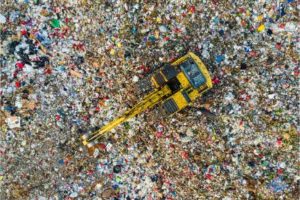 Many pulp and paper containers marketed as compostable contain plastic film linings designed to prevent leaks and maintain food safety. When these containers enter composting systems, the plastic film doesn’t break down — it remains as contamination that can compromise entire compost batches. This creates a challenging situation: Containers designed to be environmentally friendly can inadvertently introduce plastic waste into composting systems. Industrial composters face significant challenges with this contamination, as even small amounts of plastic can render entire batches unsuitable for use.
The problem extends beyond container linings. Small items like fruit stickers, plant tags, and other plastic components often contaminate compost streams. Industrial composters report that plastic debris can damage equipment and compromise the quality of finished compost.
However, it’s worth noting that when these systems work properly — with truly compostable materials in appropriate composting facilities — they can create valuable soil amendments and close nutrient loops in local food systems.
Understanding Your Options Through a Sustainability Lens
So, what’s an environmentally conscious food business to do? The goal is understanding the real trade-offs so you can make choices that align with your specific environmental priorities and operational needs.
Traditional plastics offer certain environmental advantages: They’re lightweight (reducing transportation emissions), can be recycled multiple times when proper systems exist, and require less water and energy to produce. However, they also persist in the environment when not properly managed and contribute to pollution when they escape waste systems.
For compostable options, look for containers with coatings like PHA (polyhydroxyalkanoates) that break down completely, leaving no residue. These materials can support circular systems when paired with proper composting infrastructure. However, it’s important to note that industrial composting facilities capable of processing food packaging are still limited. Many local composters only accept yard waste like grass and leaves, not compostable food containers. Even when facilities do accept packaging, strict contamination rules can make acceptance inconsistent. Without this specialized infrastructure, compostable containers often end up in landfills — where they fail to break down as intended. Also, be aware that PHA coatings may be costly and limited in availability, especially for a business scaling largely.
How to Identify Truly Sustainable Packaging
 Making truly sustainable choices requires thoroughly understanding your supply chain and local waste infrastructure. This means looking beyond marketing claims to understand the complete environmental picture.
This means asking your supplier questions such as:
- What specific materials are used in all coatings, linings, and components?
- Where are these materials manufactured, and what are the environmental standards?
- Can you provide complete traceability for every component?
- How will your customers actually dispose of the packaging in your specific market?
- What’s the full lifecycle environmental impact, including production, transportation, and end-of-life?
Understanding your local waste infrastructure is crucial. A compostable container only delivers environmental benefits if it actually gets composted. If it ends up in a landfill due to lack of composting infrastructure, it may not perform better than other options.
Traceability becomes especially important when dealing with surface treatments and additives. Different regions have varying chemical regulations, and materials that meet standards in one area may not in another.
Balancing Market Expectations with Environmental Reality
It’s important to recognize that much of today’s sustainable packaging landscape reflects market demand for “eco-friendly” products, sometimes ahead of technical solutions that deliver clear environmental benefits.
This creates complex situations where manufacturers balance consumer expectations for sustainability with the functional requirements that food products demand. A container might be technically compostable but include practical modifications that compromise this benefit. Some examples of this include “ride-along” materials such as labels, stickers, adhesives, or liners for leak resistance.
Here’s the thing: What you see on the package doesn’t always match what’s actually happening behind the scenes. If you’re running a food business, you can’t just take marketing claims at face value. Your customers are counting on you to do the homework — to look past the buzzwords and understand what these products are really doing to the environment.
Keeping Your Green Game Strong
 The goal is selecting packaging that genuinely aligns with your environmental values and fits within your actual waste management systems. This means:
- Prioritizing transparency over marketing claims.
- Understanding your local waste infrastructure and how your packaging will actually be processed.
- Considering the complete lifecycle impact, from raw material extraction through disposal.
- Building relationships with suppliers who can provide complete traceability and transparency.
- Regularly evaluating and adjusting your choices as better options become available.
The most sustainable choice you can make is an informed one. Grasping sustainability claims helps you look past marketing hype. This way, you can select packaging that truly supports your environmental goals and aligns with your business needs.
Your customers are counting on you to navigate these complexities on their behalf. By acquiring the right knowledge and remaining open, you can develop an effective packaging strategy. This approach will offer genuine sustainability, not just a false sense of it. After all, the grass isn’t always greener on the compostable side (and sometimes it is) — but with the correct information, you can find the greenest path forward for your business.
Are you interested in learning more about packaging sustainability? Visit our Learning Center today and explore a vast array of topics.