
At a Glance
- Reuse programs sound promising, but most struggle in grocery retail due to heavier containers, higher transportation costs, added labor, and increased food safety and liability risks.
- Reuse works best in closed, controlled environments (cafeterias, stadiums, campuses) or very specific product categories, not across full grocery assortments.
- Consumer participation and convenience remain major barriers — asking shoppers to return, clean, and manage containers often breaks down in real life.
- For most food retailers, the smarter path is being selective: Test reuse where it truly makes sense, and rely on lightweight, recyclable packaging everywhere else.
Remember when sustainability was just free-throwing bottles into recycling bins and calling it a day? Those were simpler times.
The U.S. Plastics Pact just published its Roadmap 2.0, complete with ambitious reuse targets that make recycling look quaint.
And you’re wondering: How does this actually work in my store?
It’s a smart question — one that deserves a practical answer. Because while reuse programs have genuine environmental benefits, implementing them in retail food environments requires careful planning and realistic expectations (we cannot emphasize “realistic” enough).
The good news? Reuse can work, but probably not everywhere you’ve been told it will. Some programs are finding success in specific categories and environments. Others are struggling with basic economics and logistics.
It’s Time to Get Answers
To better understand the reuse landscape, we spoke with Conor Carlin, Founder and President of Clefs Advisory, LLC, and the 2024 President of the Society of Plastics Engineers. A former North American GM at ILLIG and a recognized leader in sustainable packaging, Carlin brings deep expertise in materials, advanced recycling technologies, environmental policy, and commercial strategy shaped by years at the intersection of packaging innovation and sustainability.
This article breaks down what’s actually happening with retail reuse initiatives, why some are struggling while others show promise, and most importantly, how to think strategically about reuse for your specific business.
What Exactly Is the Reuse in Retail Initiative?
 Let’s start with something that may resonate: Think milk bottles from your grandparents’ era, but with modern sustainability language attached.
The Reuse in Retail Initiative (RRI) pushes for durable containers that customers return, get cleaned, and go back into circulation. Instead of single-use packaging, you’re looking at heavier, more expensive containers designed for multiple trips.
The U.S. Plastics Pact and similar organizations love this idea. It checks their circular economy boxes. But here’s the reality check: We’re talking a tiny percentage of consumer goods packaging in retail right now.
The poster child was Loop, an offshoot from TerraCycle. They shipped groceries in reusable containers — Häagen-Dazs in durable cups and beauty products in refillable packaging to name a few. It came in a padded, insulated delivery box that you’d return. Sounds efficient, right?
Why Do Most Retail Reuse Programs Fail?
The answer is annoyingly simple: Economics and human nature. Let’s look at the three biggest issues facing these programs.
The Weight Problem
Reusable containers are heavy. Really heavy. You can’t ship as many per truck — transportation costs spike. And here’s the kicker — all that extra weight means higher greenhouse gas emissions, which sort of defeats part of the purpose (isn’t it ironic?).
Yes, theoretically, you use them multiple times, so the impact averages out. But it’s like those studies showing you need to use a cotton shopping bag 7,100 times to beat a lightweight plastic one for the more sustainable option. The math gets complicated fast.
The Convenience Problem
Remember when stores started charging for plastic bags? The uproar? The rage? Now imagine asking customers to bring back containers, ensure they’re clean, and coordinate all this while juggling work, kids, and the seventeen other things on their mental to-do list.
The Safety Problem
Here’s where food businesses really need to pay attention.
Let’s think about liability for a moment. What if someone brings back an unwashed container, which touches a salad bar, and spreads E. coli? What if there’s even a tiny, infinitesimal risk of consumer harm? Is it really worth it?
In today’s risk-averse climate, that’s often enough to destroy the program. We’re more health-conscious than ever (especially after “that thing” happened in 2020), which ironically makes us less willing to tolerate any contamination risk, even theoretical ones.
What About Those Programs That Actually Work?
They exist, but a pattern will soon emerge: The smaller, more closed environments have been able to make this work. Let’s get into it.
Closed Environments Win (Within Reason)
 Reuse works great in cafeterias, universities, sports stadiums — anywhere you can control the entire loop. European Christmas markets nail this: Pay a small deposit for your ceramic mug (or boot), enjoy your warm drink, return it, and get your money back. Nobody thinks of it as a “sustainability initiative.” It’s just how things work.
Beer kegs are another example. Breweries have been doing this forever. The container is expensive and durable. There’s a clear return path. The economics make sense.
Small, Specific Product Categories
The Petaluma Purple Cup program in Northern California tested reusable coffee cups in a wealthy, progressive community where adoption rates were expected to be higher. The cups’ bright purple color was intentionally eye-catching — a behavioral nudge to help consumers remember to return them.
While still a pilot, the results were notable. Over the course of the program, more than 220,000 reusable cups were distributed through participating cafés, and 81% of residents who received a cup reported returning at least one, representing roughly 45% of the adult population.
Can This Scale in Major Retail?
Let’s be honest: Probably not in most categories.
Walk through a large big-box store. Now imagine the infrastructure needed for reuse at that scale. Industrial kitchens. Commercial dishwashers. More energy, more water, more staff, more space. Where does all that equipment go? How much does it cost to operate?
And that’s before you get to the perimeter of your store — all those PET containers with fresh foods, dairy, and prepared salads. None of these lends itself to reuse. The contamination risks are too high. The logistics are too complex. The costs don’t work. It’s enough to make your head spin!
What Should Food Businesses Actually Do?
First, stop pretending every sustainability initiative will work in your environment. Some won’t. That’s okay.
Start Narrow
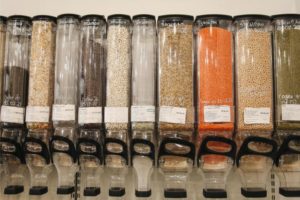 If you’re going to experiment with reuse, pick one product category. Make it something that’s:
- Not perishable
- Low-contamination risk
- High-volume enough to matter
- Simple enough that customers will actually participate
Dry goods are your best bet — think nuts in bulk bins. Beverages in controlled settings might work. Everything else? Probably not worth the headache.
Do the Real Math
Don’t just look at the feel-good marketing. Calculate the actual costs:
- Heavier containers mean higher shipping costs
- Washing infrastructure isn’t free
- It takes a lot of energy to do said washing
- Labor for managing returns adds up
- Unreturned containers are pure loss
Compare that to lightweight recyclable packaging. Sometimes the option you thought was more impactful (in a bad way) is actually better for the environment and your bottom line.
Don’t Get (Re)Used to It
Reuse initiatives won’t replace most of your packaging. They might work for small slices of your operation, in specific categories, if the economics line up and you can control the environment.
The U.S. Plastics Pact and similar organizations will continue to push ambitious targets. Some companies will keep making bold pledges. And many will quietly back away when reality hits.
That’s not cynicism — it’s practicality. That is, the goal should be finding solutions that actually work, not checking boxes on someone else’s roadmap.
For food businesses, that means being strategic. Identify where reuse genuinely makes sense. Implement it there. And don’t feel guilty about using recyclable single-use packaging everywhere else.
Aesop told us that the tortoise beat the hare. Yet, here we are: That hare has evolved to be not just fast, but efficient — for survival, and to be the first to market.
Are you interested in finding out more about packaging and sustainability? Visit the Inline Plastics Learning Center today and explore a variety of topics.
Would you like to know more about Conor Carlin and his work at Clefs Advisory LLC? Connect with him on LinkedIn today.