Listen to the audio recording of this blog post or check out the featured Podcast about this topic.
At a Glance
- Convenience stores are becoming major foodservice destinations, competing directly with QSRs through fresh, prepared meals.
- Consumers value speed and convenience, driving growth in grab-and-go and made-to-order food programs.
- Packaging now plays a critical role in shaping quality perceptions before customers take the first bite.
- Consistent, high-performing packaging helps convenience stores build trust and compete more effectively with restaurant brands.
Get ready for the glow-up many didn’t see coming. Convenience stores (known industry-wide as C-stores) have experienced a noticeable makeover of offerings in recent years.
When consumers used to imagine a C-store, they originally may have pictured hot dogs on rollers, some breakfast sandwiches, and maybe a few donuts in a case. That’s not the competition anymore (though many do still exist).
Today’s convenience retailers are cranking out some very unexpected (and mouth-watering) menu items. We’re talking hot-honey chicken and waffle sandwiches, Japanese egg salad, and burrito bowls, just to name a few.
The battle is no longer just restaurants competing with other restaurants. Convenience retailers are in the fight, and they’re winning ground. If you’re a food business professional, that fight is now at your door too. The menu arms race is well underway, and the operators who are losing aren’t failing on food quality. They’re losing on perception. Specifically, the one that starts before the first bite, the moment a customer picks up the package.
Inline Plastics has been providing packaging solutions for the fresh food industry for over 55 years. We have seen industry trends shift and buying habits change.
This article explores how convenience stores are expanding into territory once dominated by traditional restaurants and quick-service restaurants (QSRs), what this shift means for food packaging, and how food businesses can prepare for the opportunities ahead. Without further ado, let’s bite into this topic.
The Consumer Changed the Rules
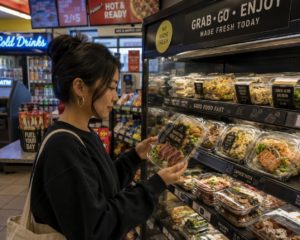 Here’s what happened: Shoppers decided that the most valuable thing on their schedule is time.
If they can fill the tank, grab breakfast, pick up lunch, and bring home dinner from one stop — they will. The idea of making a separate trip to a QSR when the C-store on the corner has a legitimately good breakfast sandwich is becoming increasingly hard to justify.
Foodservice generated record performance for convenience stores in 2025. Prepared foods now represent nearly seven out of every ten foodservice dollars sold at C-stores. This market generated (hold onto your Hot Pockets) 340 billion dollars of sales in 2025. Operators are investing in hot food programs, commissary-produced offerings, made-to-order menus, and grab-and-go fresh meals at a pace that would have seemed absurd a decade ago.
In other words, they’re not playing gas station anymore. They’re playing restaurant. And when you start playing restaurant, customers start seeing you like one.
Becoming a restaurant competitor doesn’t just change what’s on the menu. It changes what shoppers expect. Consumers don’t judge a breakfast sandwich from a convenience store against the snacks in the next aisle. They judge it against the burger they could have gotten from a QSR. The moment that happens, every part of the journey matters — especially packaging.
The Problem with Playing a New Game with Old Equipment
 Most operators have figured out the food part. Menus are improving. Quality is genuinely up across the category. The challenge is that restaurant competition isn’t won on food alone.
QSR brands have spent decades creating predictable consumer expectations. Shoppers know what they’re getting every time they visit.
As convenience retailers expand their prepared-food programs, one challenge keeps surfacing: Creating a unified shelf presence.
Many C-stores rely on multiple processors and commissaries, each making its own packaging decisions. One processor ships in its preferred package. The in-store team uses something else entirely for food packaged at the store level. The result is a mismatched shelf experience that no amount of good food can fully overcome.
Buyers may not consciously register every packaging nuance, but studies show those differences influence perceptions of quality, trust, and purchase intent.
As C-stores add more prepared food options, smart operators are making sure everything on the shelf looks like it belongs together. Because a food program that looks pulled together feels like quality — and that feeling drives sales.
What Packaging Actually Does (Beyond Holding the Food)
 When convenience stores sold mostly snacks and beverages, packaging had a fairly simple job: Hold the product until someone bought it. But when you’re competing for breakfast, lunch, and dinner, packaging takes on a much bigger role. It’s helping shape consumer perception.
Before purchase, packaging is already communicating. It tells customers whether the product feels fresh, looks premium, and seems worth the price they’re about to pay. In many ways, it signals whether the food was made with care.
The features operators care about aren’t surprising: Portability, leak resistance, moisture control, product visibility, shelf appeal, fit, and functionality.
None of those are about the food itself. All of them influence how customers experience the food.
When packaging is consistent, visually coherent, and performs well in the real world of commutes, car seats, office desks, and job sites, the entire food program feels more polished. More intentional. More trustworthy.
That’s not a small thing when you’re competing against brands that have spent decades building customer loyalty through consistency.
In many ways, packaging has become one of the easiest ways for convenience retailers to reinforce their place in the same conversation as traditional foodservice operators.
Is Your Store Ready to C the Way?
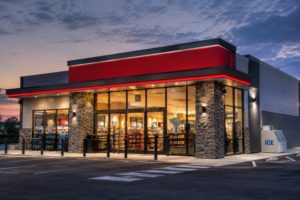
Convenience stores didn’t stumble into the restaurant business; they sprinted toward it. They built the menu, hired the staff, and set the table themselves. And customers showed up hungry.
The operators winning this fight get it. The meal isn’t just the food. It’s the whole shebang — from the moment someone picks up the package to the moment they finish eating in their car between meetings. That means the food has to be good and everything around it has to match.
Which brings us to the uncomfortable question nobody wants to ask out loud: Does your packaging actually reflect the quality of what’s inside it? Does it travel well? Does everything on your shelf look like it came from the same brand — or does it look like five different vendors had five different ideas with five very distinct levels of taste (We’re looking at you, guy who chose packaging made of tissues)?
The brands that get this right will own the space. The ones who don’t will keep making great food that may be undercut by a leaky lid and a label that looks like it was designed in 2003.
The C-stores that are going to stand out are the ones that are figuring out pretty quickly that in this new game, the wrapper is part of the meal.
Are you interested in more insights into fresh food packaging? Visit the Inline Plastics Learning Center and explore a wide range of topics.