
At a Glance
- GLP-1 medications are changing food purchasing habits, with users spending less overall on groceries and cutting back particularly on sweets, snacks, and other indulgent categories.
- Smaller portions and greater flexibility are becoming more important, creating opportunities for smaller prepared meals, salads, snack packs, half sandwiches, and portion-controlled options.
- Protein, fresh produce, and nutrient-dense foods are gaining attention, but taste, price, quality, and an enjoyable eating experience still matter.
- Packaging may need to adapt alongside changing appetites, with right-sized formats, visibility, compartments, and grab-and-go convenience helping food businesses serve smaller portions without sacrificing presentation or value.
For food businesses, understanding what consumers want has always been part of the job. But what happens when a medication starts changing how hungry some of those shoppers are in the first place?
That’s one of the questions surrounding GLP-1 medications such as Wegovy, Ozempic, Mounjaro, and Zepbound. These medications can reduce food cravings, increase feelings of fullness, and slow digestion, according to JAMA Internal Medicine. As their use has grown, their impact is now seen beyond the doctor’s office. You can find it in grocery carts, restaurants, and food businesses.
At Inline Plastics, we’ve been providing packaging solutions to fresh food businesses for over 55 years. We’ve watched plenty of food trends come and go during that time. But GLP-1s are worth watching because they could affect something fundamental: How much people eat and what they prioritize when they do.
For food business professionals, that creates some important questions. How much are GLP-1 users actually eating? What foods are they buying? Are smaller portions becoming more important? And what could all of this mean for the food and packaging you offer?
Let’s dig in. Fork optional.
How Are GLP-1 Medications Changing What Consumers Buy?

First, the obvious part: When people are less hungry, they may buy less food. You didn’t need a degree in food science to know that.
Research from Cornell University shows that households cut grocery spending by about 5.3% within six months of starting a GLP-1 medication. Spending on savory snacks fell about 10%, with substantial declines also seen in sweets, baked goods, and cookies.
But the story isn’t simply about a shrinking grocery cart. What’s going into the cart is changing, too.
PwC’s 2026 research found that 61% of current GLP-1 users surveyed said they were buying fewer sweet treats and 56% were buying fewer salty snacks. At the same time, 44% reported buying more fresh produce, 35% more packaged protein, and 34% more fresh protein.
That distinction matters for food brands. Consumers using these medications haven’t stopped eating. They may be more selective about what earns space in their kitchen.
Are GLP-1 Users Eating Smaller Portions?
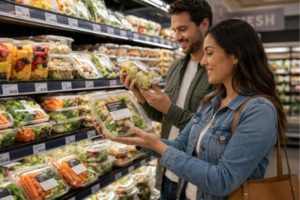 Yes, and this may be one of the most important changes for food businesses to watch.
Medical guidance published by JAMA Internal Medicine recommends smaller meals and snacks for people taking GLP-1 medications because of their appetite-reducing effects. It also suggests focusing on protein, slow-digesting carbs, healthy fats, fruits, veggies, and lots of fluids (not sugary sodas).
Consumers are also asking food businesses for more flexibility. PwC found that 35% of current GLP-1 users surveyed want restaurants to offer smaller portions at proportionally lower prices, while 32% want half portions or split plates at no extra charge.
That could create opportunities beyond restaurants.
Prepared meals, salads, smaller bowls, half sandwiches, snack packs, and portion-controlled desserts can give shoppers options that better match smaller appetites. The meal doesn’t have to be huge to be tasty!
For years, food value has often been communicated through abundance: More ounces, bigger servings, bigger portions. GLP-1s raise an interesting question for food businesses: What if the right amount becomes more valuable than the biggest amount?
What Foods Are GLP-1 Consumers Looking For?
 Protein may be the belle of the ball here, but it isn’t alone.
GLP-1 users are also shifting purchases toward fresh and packaged protein as well as produce. Meanwhile, McKinsey reports that early data show active GLP-1 users cutting back on categories such as snacks and soft drinks, with high-calorie, high-sugar, and high-fat products potentially facing greater exposure to changing consumption habits.
Fresh produce may play a particularly interesting role.
Research from the Southeast Produce Council, reported by Supermarket Perimeter, found that nearly half of GLP-1 consumers deliberately eat more fresh fruits and vegetables. The research also identified potential opportunities around smaller portions, ready-to-eat produce snacks, high-protein meal ideas, recipes, and nutrition information.
In other words, “GLP-1 friendly” doesn’t have to mean a shelf full of specialized diet products. A protein-packed snack box, smaller prepared meal, fresh fruit cup, mini salad, or portion-controlled treat may fit naturally into the same eating habits.
Do GLP-1 Consumers Still Care About Taste?
Smaller appetite does not mean smaller expectations.
Even as health becomes more important, McKinsey’s 2026 research found that taste, price, and quality remain the top factors consumers prioritize when making food and beverage purchases, while healthiness is the fastest-rising consideration.
That’s an important reminder for food businesses. A smaller portion still needs to look appetizing. A protein-forward meal still needs to taste good. Fresh produce still needs to look fresh. And a portion-controlled dessert is, after all, still dessert.
The opportunity isn’t necessarily to replace enjoyment with nutrition. It’s to find ways to deliver both in an amount that makes sense for the consumer.
What Do GLP-1 Trends Mean for Food Brands and Packaging?
 This is where the trend becomes especially relevant for food business professionals.
If consumers increasingly want smaller portions, nutrient-dense foods, fresh produce, protein, and convenient meals, the package holding those foods needs to keep pace.
A smaller portion in an oversized package can look skimpy. A colorful salad hidden from view loses some of its visual appeal. A protein-and-produce snack may benefit from compartments that keep ingredients separated. And grab-and-go foods need packaging that fits how and where consumers plan to eat them.
Food businesses don’t necessarily need to redesign everything around GLP-1 users. Many of these needs extend beyond people taking the medications. Smaller meals, fresh foods, protein, convenience, and portion flexibility can appeal to commuters, office workers, older consumers, health-conscious shoppers, and anyone who simply isn’t looking for a massive lunch.
GLP-1 medications are adding another variable to an industry that already has plenty. But they also offer food businesses a reason to reconsider an old assumption.
More food isn’t always more value.
Sometimes the better answer is the right food, in the right portion, presented in the right package.
And for food businesses trying to keep pace with changing appetites, that’s a pretty good place to start.
Interested in finding out more about food industry trends? Visit our Learning Center today and explore a variety of topics.