At a Glance
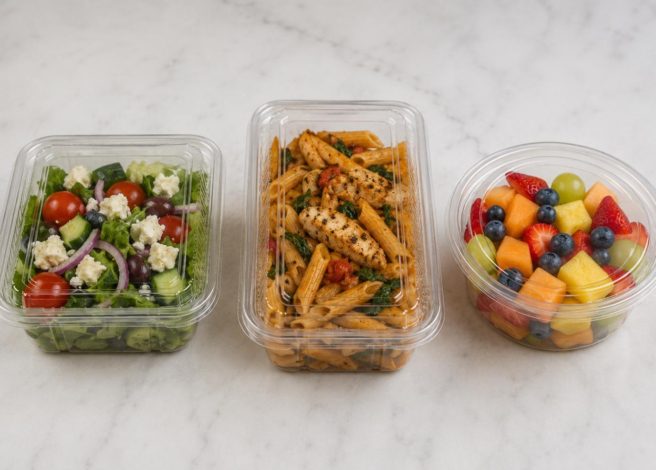
- Container shape impacts more than appearance, influencing shelf efficiency, branding, shipping, and the consumer experience.
- Rectangular containers maximize shelf space and label area, making them ideal for many fresh food categories.
- Square containers offer a balance of efficiency and premium presentation, with a clean, symmetrical look and strong stackability.
- Round containers excel for bowl-style foods, prioritizing usability and presentation over maximum shelf efficiency.
It’s time for you to shape up. No, we’re not hinting at your attitude or lifestyle, but we’re talking about your packaging choices for your fresh food business.
If you’ve ever stared at a catalog full of container options and wondered whether shape actually matters, you’re not alone.
It’s one of those decisions that seems small until you realize it affects everything from how many units fit on a shelf to how your product looks in a shopper’s hands.
It’s a question we’ve heard from customers, and after more than 55 years of working alongside fresh food businesses, we’ve seen the same lesson play out again and again: Shape isn’t just packaging…it’s strategy. The right container can help a retailer fit more products on a shelf, help a consumer recognize your brand in half a second, and even improve how efficiently your product stacks and ships.
So let’s break down what square, rectangular, and round containers each bring to the table (literally), where they shine, and how to choose the right one for your product. Now, let’s get into shape (no sit-ups required, thank goodness).
Does Container Shape Really Affect Shelf Space?
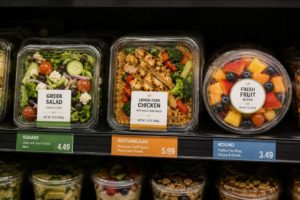 Yes, more than most people expect. Most grocery shelves are built around 48-inch-wide gondola sections, with shelf depths commonly falling between 18 and 24 inches, depending on the category. Unfortunately, shelves don’t magically get bigger just because your package does.
Rectangular and square containers tend to make the best use of that space, and it’s not just a hunch; it’s basic math. Have you ever packed a moving van? It’s basically Tetris.
Squares and rectangles fit together with zero gaps. Circles don’t. However you line them up, circles only cover about 78.5% of the space around them, like a tray of soda cans with little gaps between every one. Multiply that across a whole refrigerated case, and that’s shelf space retailers would rather sell than waste.
That doesn’t make round the wrong choice. It just means shelf efficiency is one piece of a bigger puzzle. Now we’re getting into Candy Crush territory. Let’s look deeper.
When is Rectangular Packaging the Best Option?
 Not always, but it’s a strong default for many categories. Rectangular packaging tends to give brands a bigger, cleaner surface for labels. That matters a lot for products like:
- Prepared meals
- Deli items
- Bakery goods
- Fresh-cut fruit
- Salads
More label space means more room for your branding, your nutrition facts, and your barcode, without things feeling cramped. Rectangular shapes also give merchandisers flexibility. They can be turned front-to-back to fit more units, or side-to-side to show off the label, depending on what the retailer is trying to accomplish that week.
When Does Square Packaging Make More Sense?
 When is it hip to be square? (Sorry, we couldn’t resist). Square containers are the reliable middle ground. They’re not chasing maximum shelf efficiency the way rectangles are, but they’re not sacrificing much either.
Square shapes tend to work well when:
- A clean, symmetrical presentation is part of the brand story, as research by Velesco has shown, consumers often associate symmetry with more premium brands.
- The shelf depth lines up closely with the package size.
- A retailer wants a clean, uniform look.
- Products need to stack efficiently in the back room before they hit the floor.
If your product benefits from looking tidy and modern sitting next to a dozen identical containers, square is worth a serious look.
When Do Round Containers Work Best?
 With certain foods, round makes sense. If you walk down any deli or refrigerated aisle, you’ll spot round containers holding soups, dips, salsas, hummus, prepared salads, and snack bowls. There’s a reason that pattern hasn’t changed.
Round containers feel familiar to shoppers (can you imagine pouring soup out of a rectangular container into a bowl?). They’re comfortable to hold, easy to eat or mix from, and they give bowl-style foods a presentation that looks natural rather than backed into a corner…for real.
The tradeoff for rounds is shelf space. As previously mentioned, round packaging leaves small gaps between containers, so it generally uses more space for the same product volume compared to square or rectangular options.
For the right product, though, that tradeoff is worth it. Shoppers aren’t always thinking about planogram efficiency (turns out that not every consumer is a packaging nerd like we are). They’re thinking about whether the product looks appetizing and easy to use, and round shapes often win on that front.
A Quick Note About Shipping
According to research from Packaging World, square containers can sometimes make pallet planning a little simpler thanks to their symmetry, but whether they actually lower transportation costs depends on how efficiently they fit on pallets and in shipping configurations.
So, Which Shape Is Right for Your Product?
 There’s no single correct answer here, and that’s honestly good news. It means you have room to match the container to your product, your brand, and your customer, rather than forcing every item into the same shape. Let’s break down the shape debate:
Following the basis for each reason below is a breakdown of where specific shapes make sense:
Consideration, Basis for Rating
Shelf Efficiency: Rectangular footprints typically utilize linear shelf space more effectively than round containers because they minimize unused gaps. Square containers are close behind.
Label Space: Rectangular packages generally provide the largest uninterrupted front panel. Square containers also offer good label area, while round containers have curved surfaces that can limit front-facing graphics.
Stackability: Square and rectangular packages typically stack more predictably in cases and on pallets. Round containers can stack well depending on their design, but their footprint is generally less efficient.
Consumer Familiarity: Round containers are strongly associated with soups, dips, deli salads, and bowls. Rectangular containers are familiar for prepared meals and bakery items.
Bowl-style Foods: Round containers naturally fit foods that are eaten or mixed in the package.
Prepared Meals: Rectangular containers usually present compartmentalized meals and proteins most effectively while maximizing shelf presence.
Shipping Efficiency: Square and rectangular footprints generally cube out cases and pallets more efficiently, although actual shipping performance depends heavily on the specific package design.
| Consideration | Rectangular | Square | Round |
| Shelf Efficiency | Excellent | Very Good | Good |
| Label Space | Excellent | Very Good | Moderate |
| Stackability | Excellent | Excellent | Good |
| Consumer Familiarity | Very Good | Good | Excellent |
| Bowl-style Foods | Moderate | Moderate | Excellent |
| Prepared Meals | Excellent | Very Good | Good |
| Shipping Efficiency | Excellent | Very Good | Moderate |
The best move is to think through what your product needs to do on the shelf, in the fridge, and in someone’s hands, and then match the shape to that job. After decades of helping fresh food businesses make exactly this call, we can tell you it’s rarely about picking a trend. It’s about picking what actually works for your product.
If you’re interested in more insights about plastic food packaging, visit the Inline Plastics Learning Center today and explore a wide range of topics.