
At a Glance
- Learn how polypropylene (PP) is made and why its pricing can change so quickly.
- Discover the biggest drivers behind polypropylene price volatility, from propane markets to production outages.
- Understand which market indicators can provide early warning of potential price increases.
- See what food businesses can do to reduce surprises and better prepare for resin market fluctuations.
Your packaging quote changed again. You weren’t prepared. It just…moved. And it did so faster than concert tickets from your favorite 80s band reunion tour (still waiting for you to come around again, New Kids on the Block!).
As a food business professional, your metaphorical plate is already full. So how can you be prepared when a packaging material like polypropylene suddenly changes in price? Were there warning signs along the way?
Here’s the short answer: Polypropylene (AKA “Polypro” or “PP”) — the plastic in a huge portion of food packaging — is made from propylene, a petrochemical building block commonly produced from crude oil or propane. That means that every time something rattles the energy markets, your container eventually feels it.
At Inline Plastics, we make food packaging for fresh, hot, cold, and ambient food, and this is the question we hear often: Why does the price keep moving? While we also produce PET (polyethylene terephthalate), today we’ll focus on its cousin in food protection: Polypropylene. In fact, we reached out to an international market expert on plastic resins to get the 4-1-1 on what drives shifts in this material.
This article breaks down how polypropylene is made, what makes it volatile, and what to watch so the next quote doesn’t blindside you (like when those ‘New Kids’ tickets went on sale in your city 8 years ago and you had no idea).
What is Polypropylene Food Packaging?
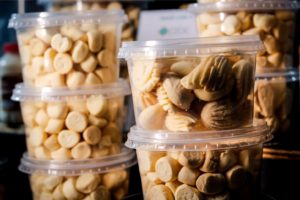 Getting right to it: PP is one of the most common plastics in food packaging — clamshells, deli containers, two-pieces, you name it. It’s lightweight, durable, and can handle both hot and cold food. For many food businesses, it’s essential.
Science Hats On
At its core, polypropylene is made by linking propylene molecules into long chains — think of it like twisting individual strands of spaghetti into a rope. That rope is your plastic. The process is called polymerization, which sounds complicated but really means “stringing molecules together until you have something you can mold into something…like a container!”
The trickier question is: Where does propylene come from in the first place?
Where Does Polypropylene Come From?
Propylene has two main sources: Crude oil and natural gas.
When crude oil gets refined, propylene is one of the byproducts. But here’s the thing: Much of that crude-derived propylene doesn’t end up in plastic. It gets blended into jet fuel and gasoline first. Only after purification does it become “polymer-grade” propylene, which is what actually goes into making polypropylene.
In the U.S., the story is a little different — and a little luckier. The Shale Boom in the early 2000s gave America access to cheap, abundant propane. That propane gets fed into facilities called crackers, which cook it down into propylene. So instead of starting with crude oil, many U.S. manufacturers skip straight to propane and get the same result for less money.
The practical upside: When oil prices spike overseas — say, because of a geopolitical conflict — countries that still rely heavily on crude oil take the hit hard. U.S. producers stay relatively protected.
Relatively. That word is doing a lot of work in this article.
So, Then Why Does Polypropylene Pricing Feel So Unpredictable?
 Quite frankly, because it is, and there are several legitimate reasons for that.
Propane demand competes with production. Propane isn’t just a feedstock for polypropylene — it’s also used to heat homes and generate electricity. During cold winters, propane inventories drop, and prices rise. When raw materials become more expensive, producers can pass those costs downstream. This means that your packaging quote could go up.
The equipment needs attention. Propylene is produced in large, capital-intensive facilities that require regular maintenance. Individual crackers and polypropylene plants can go offline for scheduled turnarounds, maintenance, or unplanned outages. Because many U.S. crackers produce propylene as a co-product, even one outage can temporarily reduce available propylene supply, especially when multiple facilities are affected at the same time.
What Should Food Business Pros Actually Watch?
You’re not a commodities trader. You shouldn’t have to be. But a few market signals are worth keeping tabs on:
- Propane inventory reports (published weekly by the U.S. Energy Information Administration) — when winter inventories drop, polypropylene price increases tend to fluctuate.
- Severe weather events — hurricanes, winter storms, and other major weather disruptions can knock cracker facilities offline fast, tightening supply across the board.
- Crude oil headlines — even though the U.S. leans on propane, global oil price swings still ripple into export pricing and eventually land on domestic markets.
- Supplier alerts about production outages — if your resin supplier flags a facility shutdown or supply disruption, that’s not routine communication. It means the available supply just shrank, and pricing will reflect it.
How Long Does It Take for the Market to Stabilize After a Disruption?
 Well, it wouldn’t recover overnight. Supply chain recoveries involve shipping routes, port capacity, inventory rebuilding, and production ramp-ups — none of which happen in an instant because someone decided things should be back to normal. A reasonable estimate for markets to stabilize after a meaningful disruption will take months, though the timeline can vary depending on the scope of the disruption and whether multiple factors are stacking up.
The practical takeaway: If you’re hearing noise in the market, don’t wait for your supplier to call. Ask questions, check your contract terms, and if you have flexibility on lead times, use it.
Polypro in a Cracked Nutshell
Polypropylene starts as a gas, travels through crackers and purification columns, and eventually ends up holding someone’s grab-and-go lunch. It’s a long journey — and now you know the terrain.
The market will keep moving, but being informed is not a bad place to be — not just for your polypro decisions, but also for when your favorite band comes back to town.
Want to discover more about dynamics in plastic resin markets? Visit the Inline Plastics Learning Center today and explore a variety of topics.