At a Glance
- The 2026 IDDBA show highlighted strong momentum across dairy, deli, and bakery, while revealing important shifts in category performance and consumer demand.
- Protein has become a dominant purchase driver, expanding beyond dairy into categories like bakery and influencing product innovation.
- Inflation, GLP-1 medications, and a generational shift toward Millennials and Gen Z are reshaping how consumers shop for fresh foods.
- As grab-and-go convenience, transparency, and portion flexibility become more important, packaging plays an increasingly critical role in building trust and driving sales.
Cookies. Croissants. Cakes…Oh my!
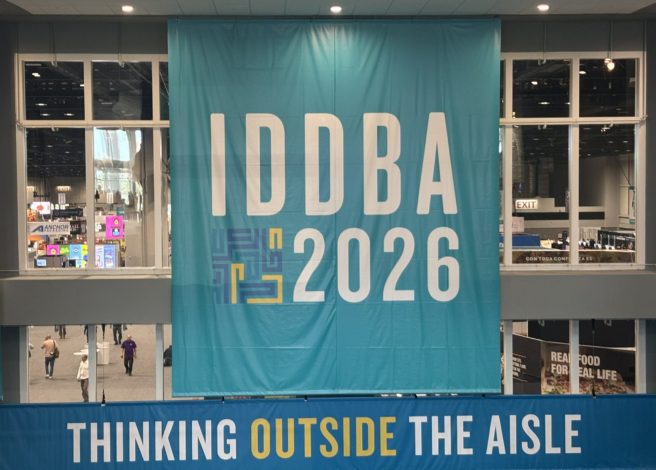
The 2026 International Dairy Deli Bakery Association (IDDBA) show was held early this June in Orlando, and yours truly was excited to attend for obvious reasons. (Spoiler: Samples.)
Mark here, the Content Manager Extraordinaire at Inline Plastics. When posed with the idea of attending one of the largest events involving trends, dynamics, and the smell of baked goods, I couldn’t pack fast enough.
Here’s the thing, though: Many food industry professionals don’t have time to attend events like this. Between managing overhead, protecting margins, chasing trends, and anticipating what consumers want next, getting to a major trade show may not be in the cards.
That’s exactly where Inline Plastics comes in. With over 55 years in fresh food packaging, we make it our business to stay close to the industry — attending the events, listening to the conversations, and bringing what we learn back to you.
So consider this your insider’s briefing. In this article, I’ll break down what was being discussed on the show floor, what trends industry leaders are paying attention to, and what you can expect the dairy, deli, and bakery space to look like going forward.
The State of the Industry: Mostly Good News, With an Asterisk
 The keynote was titled “From Brie to Brioche” and delivered by Anne-Marie Roerink of 210 Analytics. They surveyed over 1,500 shoppers, dug into third-party sales data, and pulled examples from more than 100 stores across 15 countries. This data is now publicly available.
The big takeaway? The deli department as a whole is killing it — outpacing almost every other section of the store on both dollars and units. But like any good story, there’s nuance. Deli cheese is thriving. Deli-prepared foods are booming. Deli meat, however, is a different conversation, and we’ll get there.
First, the good stuff. Deli cheese, which lives in the deli department, not the dairy aisle (I know, it’s a little confusing), is on a particular run, with specialty varieties like mozzarella, Hispanic cheeses, and parmesan leading the way. People are getting fancy with their cheese boards, and the numbers back it up.
Dairy is holding its own, fueled almost entirely by the protein craze. Yogurt, cottage cheese, and eggs are the stars. Speaking of cottage cheese…if IDDBA had a red carpet, this cheese would be in the finest gown, surrounded by photographers, wearing the most expensive stilettos. It was the most Googled recipe ingredient in the country this past year, and that internet fame showed up directly on the shelf. Social media moves product. Cottage cheese proved it.
Bakery is more of a mixed bag — or pink box, if you will. People are still buying baked goods, just a little less of them. Cakes, muffins, donuts, and pastries are the bright spots, with donuts leading the way thanks to fun flavors and pop culture tie-ins, according to 210 Analytics.
Now, about deli meat — this is the asterisk in the headline. Dollar sales are holding, but units are sliding. What’s keeping it relevant? Grab-and-go. Pre-packaged, snackable formats are growing fast, and they’re the reason deli meat still has a seat at the table. For packaging, that’s not a footnote — that’s the whole story.
Shoppers Are Stressed — But They Haven’t Given Up
 Many shoppers are feeling the effects of inflation. A lot of them have cut back on restaurant spending. And pretty much everyone is paying closer attention to what things cost.
But (importantly) they’re not quitting on their favorite foods. According to new publicly-available data presented by Circana, consumers are adjusting. Some are buying bigger packs to save money over time. Others are going smaller to keep the weekly bill manageable. They’re store-switching, brand-switching, and promo-hunting like it’s a sport.
Pack size variety matters more than ever. The single person grabbing lunch and the family stocking the fridge for the week are both in the aisle…and they need different options with packaging that makes the value obvious at a glance.
Protein, Protein, and More Protein!

Hold onto your biscuits for this part: If IDDBA 2026 had a theme song, it would just be the word “protein” on repeat.
Many consumers are following some diet or wellness approach right now. For younger shoppers especially, high-protein is the number one priority — ahead of keto, ahead of low-carb, ahead of everything. And the industry has responded in a big way.
Protein claims are growing fast across deli and dairy. But the most surprising stat of the show? Bakery protein claims are growing at an extraordinary rate. Bakery. The category that gave us danishes and birthday cake is now a protein delivery vehicle. Protein cookies, protein bread, protein wraps — they’re not trend pieces anymore. They’re mainstream.
There’s a related force at work here, too: GLP-1 medications like Ozempic and Wegovy.
According to analysis from KFF, more than 15% of Americans are currently using them. These shoppers eat less, think more carefully about every bite, and put a premium on protein and fiber. For brands and retailers, that means smaller portion sizes, cleaner labels, and packaging that clearly communicates nutritional benefits isn’t just nice to have. They’re becoming the price of entry.
A side note: The protein donut samples were pretty tasty!
A Generational Shift Has Happened
 Here’s the stat that genuinely stopped me mid-bagel: After 30 years of Baby Boomers driving the majority of consumer spending, 210 Analytics projects that Gen Z and Millennials will take over within the next two to three years.
That’s not a small thing. These generations shop, eat, and think about food completely differently.
Gen Z wants global flavors, like Korean, Vietnamese, and Mexican, to name a few. They care deeply about what’s in their food, how it was made, and whether the brand behind it shares their values. They want grab-and-go, single-serve, and ready-to-heat. And according to 210 Analytics’ survey, not a single Gen Z respondent listed liver and onions as a favorite meal. Which honestly tracks (sorry, Dad, if you’re reading this).
For anyone in the fresh food industry, this shift has real implications for packaging. Younger shoppers want to see what they’re buying. They want labels that are easy to read and honest about what’s inside. Tamper-protected, clear, right-sized packaging isn’t a bonus feature for this group. It’s expected.
A Wrap on IDDBA 2026
 The categories winning right now have something in common. They’re making it easy:
- Easy to grab
- Easy to understand
- Easy to feel good about buying
At Inline Plastics, that’s exactly what we think about. Packaging is never just a container. It’s the first thing a shopper sees, the thing that earns their trust, and often the reason they reach for one product over another. These aren’t small details. They’re the whole game.
IDDBA 2026 made one thing crystal clear: The food industry is changing fast. Consumers are telling you exactly what they want — smaller portions, more protein, grab-and-go convenience, and packaging they can actually trust. At this point, the data isn’t subtle. It’s practically waving its arms faster than yours truly in a line for free samples…all of which were excellent. That part wasn’t hard to report at all.
Interested in exploring more industry trends? Visit the Inline Plastics Learning Center today and explore a variety of topics.