At a Glance
- “Technically vs. actually recyclable” means an item may be recyclable in theory but isn’t collected, sorted, or reprocessed locally, so it doesn’t become new material.
- Multi-layer films, PLA, other bioplastics, and many compostables fail in real systems and can contaminate streams.
- Clear PET and polypropylene move through existing infrastructure and retain value while PCR content demand exceeds supply.
- Choose proven materials, minimize layers, and verify with local MRFs to protect trust and compliance.
Your customers care about the environment. They’re scanning labels and making purchasing decisions based on sustainability claims. However, the “recyclable” symbol on your packaging may be wishful thinking.
The difference between what can be recycled and what actually gets recycled affects food businesses. It costs them trust in their brand, causes compliance issues, and precludes them from important market opportunities. As you refine your recipes and handle supply chains, remember that inefficient packaging can undo your hard work.
This week, we sat down with Conor Carlin to get to the bottom of this conundrum. Carlin is the founder and President of Clefs Advisory, LLC. Working at the forefront of packaging and sustainability, he held the position of President of the Society of Plastics Engineers in 2024 and previously served as General Manager of ILLIG in North America. His expertise spans materials, policy, packaging tech, commercial strategy, and market intelligence.
This article reveals the hidden complexities of food packaging recyclability and shows you which materials actually deliver. You’ll see why some “eco-friendly” choices don’t work, and you’ll find the clear winners that succeed in the recycling system.
The Problem Every Food Business Faces (But Few Understand)
 When you walk into any grocery store, you’ll see packaging that’s the equivalent of false advertising. Compostable cups promise environmental salvation. Plant-based containers proudly showcase their eco-friendly features, much like fans at a football game with green faces. And shockingly, some plastic packaging advertises itself as good for the environment when it can’t even be recycled (we’re looking at you, resin identification code #7, “other,” you sneaky fiend).
Here’s what the symbols don’t show: Most of this packaging won’t make it far in a Materials Recovery Facility (MRF). That’s the place designed to properly handle and sort items that are actually recyclable.
The recycling industry operates on brutal economics. MRFs sort thousands of tons of material daily. They require high-volume, consistent streams of similar materials to generate revenue. That beautiful artichoke-based cup your coffee comes in? It’s heading straight to the landfill because no facility in a 500-mile radius can process it.
Your customers believe they’re making a green choice. At the same time, your business is gaining recognition for leading in sustainability. Until they find out the truth.
The Multi-Layer Trap That’s Catching Everyone
Unlike your award-winning lasagna, having layers isn’t always a great thing.
Multi-layer films may appear to be sustainability winners due to their light weight, but when different materials get laminated together, they become almost impossible to separate — like trying to unscramble an egg. The oxygen barrier layer, made of Ethylene Vinyl Alcohol (EVOH), keeps your product fresh. But it can also make the package hard to recycle, depending on how much is used.
These materials can’t be reused because they don’t blend properly when melted. Even chemical compatibilizers that are designed to solve this issue are too expensive for large-scale use. Your packaging might work in a lab, but real-world recycling economics render it ineffective.
The Bioplastics Problem Nobody Talks About
 Bioplastics like PLA and PHA sound perfect — made from plants instead of petroleum. But they’re contaminating existing recycling streams and creating new problems.
PLA looks identical to PET plastic. When it sneaks into PET recycling, it ruins entire bales of material. It’s like adding sardines to your cupcakes — it just doesn’t mix. That’s why bioplastics are assigned a resin code of 7: “Other.” Remember that these codes are merely designed to identify the plastic resin; they do not imply recyclability.
The environmental trade-offs? Growing corn or sugarcane (or sugar beets for our European friends) for these materials requires a massive amount of land and water. In some ways, you’re choosing between fossil fuel extraction and intensive farming. Many facilities can’t process bioplastics, even when sorted, so they often end up in landfills, where they may produce methane gas, an emission roughly 28 times more potent than carbon dioxide.
Fully Compostable? Think Again.
Compostable packaging creates an even bigger problem. Those responsible-feeling coffee cups and food containers? Many have liners with PFAS (per- and polyfluoroalkyl substances). These “forever chemicals” make them liquid-resistant. However, they also stop composting facilities from accepting them. They end up in landfills, producing (you guessed it) methane gas. Are you seeing a pattern here with the release of methane? Even “clean” compostable packaging needs special industrial facilities. Often, these facilities aren’t found in your local area.
Paper cups face the same fate. Even though they appear recyclable, their plastic linings render them unsuitable for paper recycling. Most composting facilities also reject them. The result? A first-class ticket to Landfill Town.
The Clear Winners: Materials That Actually Work
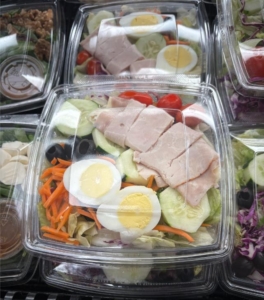 While the industry debates the merits of various bio-based alternatives, two plastic materials actually deliver on their recyclability promises: Clear PET (polyethylene terephthalate) and polypropylene, which are mono-material.
Clear PET bottles represent a success story in recycling. The infrastructure is in place, the economics are sound, and the end markets are established. When customers recycle a clear plastic bottle, it gets turned into post-consumer recycled (PCR) content. This content is then used to make new, similar products like bottles or clamshells. This is the definition of closed-loop recycling or “circularity.” The system functions because the material maintains its properties through multiple recycling cycles.
Here’s the catch: Demand for PCR content is outpacing supply. Many states, such as Colorado, are implementing minimum recycled content mandates, requiring bottles to contain 20% or more PCR content by 2030. However, we don’t yet produce enough recycled material to meet these requirements nationwide, which is why improving collection and sorting systems is so crucial.
The Economics That Drive Reality
Recycling success comes down to simple economics. Virgin plastic production runs continuously and efficiently. Recycling, on the other hand, is a costly process. It involves several steps, such as transportation, cleaning, and sorting, which add expenses at every turn. Unless recycled materials can compete on price with virgin alternatives, the system fails.
This explains why certain plastics succeed while others don’t. It’s not about environmental virtue — it’s about profit margins.
Don’t Get Cycled Out: Your Next Move
 Ditch the marketing speak and focus on what works today. Clear PET and polypropylene mono-material containers are reliably sorted through recycling systems; multi-layer packaging is not.
When you must choose performance over recyclability, own that decision. Reducing material use by a percentage can be better than using “superior” materials that can’t be recycled.
Focus on what actually works, not what sounds good. Audit your packaging: Does it move through real recycling systems in your markets, or does it need facilities that don’t exist?
Businesses that choose packaging tailored to today’s needs can avoid compliance issues. This approach also helps build customer trust while creating an authentic voice in a sea of greenwashing.
The choice is yours: Keep playing recycling roulette with unproven materials, or bet on the clear winners that actually deliver on their promises. Your customers, regulators, and bottom line are all watching.
Are you interested in learning more about food packaging and sustainability? Visit our Learning Center today and explore a wide variety of topics.
Want to know more about Conor Carlin and his work at Clefs Advisory LLC? Connect with him on LinkedIn.