
Listen to the audio recording of this blog post or check out the featured Podcast about this topic.
At a Glance
- EPR fees are unavoidable: If you sell food in packaging, you’ll help fund recycling systems — and costs change based on material type, weight, and recyclability.
- Packaging choices affect the bill: Single-material, recyclable packaging and recycled content can lower fees; mixed or hard-to-recycle materials raise them.
- This is a planning issue, not just a fee: Eco-modulation fees signal where redesigns now can prevent higher costs later as more states adopt EPR.
- Waiting gets expensive fast: Fines, retailer pushback, and rushed redesigns make early audits and testing the safer move.
“EPR” sounds like something your doctor might order after a medical scare, but it’s actually “Extended Producer Responsibility,” and it could make your packaging more expensive…if you’re not strategic.
Before we panic, let’s examine the basic premise: If you sell products in packages, you now help pay for recycling said packages after customers toss them. Several states already have this system running. More are joining. And the fee structure can be wildly confusing.
It all comes down to understanding how the whole thing works — and frankly, nobody’s explaining it in a way that makes sense to people who want to sell food.
To help us navigate this EPR conundrum and maze of recycling nuance, we turned to Conor Carlin, Founder and President of Clefs Advisory, LLC. A highly experienced voice in the industry, Carlin served as the 2024 President of the Society of Plastics Engineers and previously worked as the North American GM of ILLIG. His wealth of expertise spans materials, advanced recycling technologies, environmental policy, and commercial strategy — all shaped by years at the nexus of packaging innovation and sustainability.
Let’s break down the TLDR of EPR in a way we can actually understand.
The Part Where We Explain What EPR Actually Is
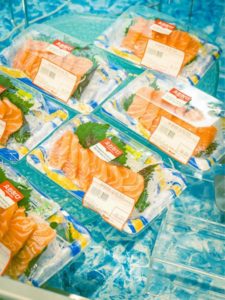 Extended Producer Responsibility works like this: You pay upfront for the recycling infrastructure that handles your packaging. Think of it as a membership fee for the recycling system, except you can’t opt out, and the price changes based on the packaging your products come in.
The U.S. Plastics Pact treats EPR as infrastructure funding, not just another regulatory box to check. Someone has to pay for collection systems, sorting facilities, and recycling operations. EPR says that “someone” is you (without being aggressive like that crazy uncle pointing fingers at holiday functions).
For food businesses, this plays out differently than in other industries because packaging isn’t optional. Your customers’ entrees need containers. Those sauces need to be separated. And now each material choice comes with a fee structure that varies more than you’d expect…it’s okay to take a breath. Keep reading!
How Much Do EPR Laws Cost?
Here’s where it gets interesting. EPR uses “eco-modulation fees,” which is a fancy term for “we charge you more if your packaging is hard to recycle.” A wild oversimplification, yet justifiable. Let’s look into actual numbers: That clear plastic clamshell for your Caesar salad? If it’s PET thermoformed plastic, you could be looking at around 70 cents per pound in fees (a completely hypothetical figure for the sake of conjecture). Not terrible, right? Now consider the paper-based molded fiber alternative — same general shape, same basic function. That one could be 3 cents per pound (again, just a scenario).
Yes. Three cents versus seventy cents. For the same amount of packaging, doing a similar job.
Paper gets a lower rate because its recycling infrastructure may already be in place. People know what to do with it. Plastic thermoforms are technically recyclable — they’re made from a single material — but the collection systems aren’t as developed. So you pay more now, with the promise that these fees will eventually fund better plastic recycling systems.
The catch? “Eventually” might happen after your competitors have already switched to cheaper materials.
Using EPR Strategically (Or At Least Less Painfully)
 EPR fees are going to cost money. But treating them as an unavoidable expense misses the actual strategy here. And they’re not exactly written in stone just yet. The State of California has postponed the rollout of its EPR rules not once, but twice. Big state = lots of complexity
Eco-modulation fees are basically a pricing menu. They tell you exactly which packaging costs more and which costs less. Some businesses are redesigning now, before fees hit everywhere.
Single materials beat mixed materials. A package that’s 95% one type of plastic, with a few other materials mixed in, incurs higher fees than a pure single-material package. Even if the mixed version is lighter and has a smaller carbon footprint. Which brings us to the weird part: EPR optimizes for recyclability, not environmental impact. A lightweight package might be better for the planet, but it could cost you more in EPR fees because it’s harder to recycle. A package with more recycled content could reduce those fees.
Small changes add up. Reducing package weight — going from a heavier PET clamshell to a lighter container lowers your fees. Not huge per unit, but multiply that across production runs, and it’s real money.
Your spot in the supply chain matters. Distributors might pass fees to customers. Brand owners and producers are probably stuck with them. And the rules vary by state.
What Happens If You Ignore EPR Fees
States with EPR enforcement aren’t messing around. Fines run $25,000 per day for non-compliance, in Oregon, for example. Per day.
Beyond fines, there’s the retail problem. If you haven’t registered with your state’s Producer Responsibility Organization (PRO) or haven’t proven your packaging meets recyclability standards, retailers might just skip your products. They don’t want the hassle of working with suppliers who haven’t sorted out EPR.
Some large companies might calculate that paying fines is cheaper than redesigning everything. For most food businesses, that math doesn’t work.
What To Do RIGHT NOW About EPR Fees
 Even if EPR hasn’t hit your state yet, preparing now beats panic later.
Audit every package. Pretend eco-modulation fees already apply. What material is each container made of? Single or mixed? What does it weigh? Could it be lighter? You’ll need these answers eventually.
Use the APR Design Guide. The Association of Plastic Recyclers updates this regularly with guidance on resins, inks, adhesives, and barriers — everything that determines if your package counts as “recyclable.” Monitor these regulations like you would your bottom line.
Don’t expect perfect clarity on fees. Unless you’re already producing in an EPR state, exact numbers aren’t public yet. But Colorado and California have released guidance that’ll give you ballpark figures.
Test alternatives carefully. That paper option with lower fees looks great until you find out it doesn’t prevent leaks or keep food fresh as long. EPR fees matter, but so does a package that actually works. The more you know, the better, always!
EP-R You Heading in the Right Direction?
EPR is running now in multiple states, with more joining soon. The fees aren’t arbitrary — they’re designed to push businesses toward recyclable packaging and fund the infrastructure to handle it. There are 4 major areas where companies will be affected by EPR requirements:
- Staff time: Compliance, legal, operations
- Third-party data providers or external resources to manage company SKUs
- Sustainability program changes or packaging redesign / reformulation
- EPR fees themselves
Understanding this before fees show up on invoices gives you time to make actual decisions instead of reacting in crisis mode. Start with that package audit. Look at alternatives that still protect your products. Do…not…panic!
Watch what’s happening in states where you do business. The companies handling this early will have smoother transitions than the ones scrambling when fees hit. That’s not dramatic — it’s just how regulations work. Getting ahead of it now means fewer surprises later, and in the food business, fewer surprises is always better, which any chef would agree with.
Do you want to find out more about packaging and sustainability? Visit the Inline Plastics Learning Center today and explore a wide range of topics.
Would you like to know more about Conor Carlin and his work at Clefs Advisory LLC? Connect with him on LinkedIn today.

