
At a Glance
- Faster freezing creates smaller ice crystals, which helps maintain texture, retain moisture, and protect overall product yield
- Slower freezing leads to larger ice crystals, causing cell damage, excess purge, and lost sellable weight
- Poor freezing forces you into heavier, more expensive packaging to manage moisture and protect appearance
- Strong freezing gives you more flexibility with packaging, but it still needs to hold up through temperature swings in the cold chain
Nobody gets into the food business to watch good products go bad, especially when you work hard on perfecting them. Yet some businesses ship frozen food that looks great on the line and arrives looking like it lost a fight with a yeti in the Himalayas. Soggy textures…unhappy buyers…and a lot of finger-pointing at the packaging.
Here’s the thing: The packaging may not be the entire problem; the freezing method could be.
To get straight answers, we talked to Dr. Bill Adams, Director of Food and Pharmaceuticals for ALTEC Engineering Solutions at Airgas. Dr. Adams has spent his career helping processors stop losing money between the freezer and the shelf — and he had a lot to say.
In this article, we’ll break down how freezing affects your product’s quality and yield, why those decisions directly shape your packaging choices, and what you can do to make sure what leaves your facility actually arrives in great shape (and stays yeti-free).
Why Does Freezing Speed Matter So Much?
 Let’s start with the basics of freezing, and by that, we’re talking about ice crystals. That’s the whole story, really.
Freeze fast, and you get tiny, micro-sized ice crystals that stay neatly inside cell walls. The following freezing wins happen:
- Moisture stays put
- Texture holds
- Yield stays high
Freeze slowly, and those crystals grow large enough to rupture cell walls, releasing moisture that pools at the bottom of the package as “purge.”
Frozen purge is the cold food industry’s version of a bad review. It looks terrible, signals compromised quality, and depending on how bad it gets, can even become a food-safety concern. Nobody’s putting “now with more purge!” on their packaging (unless they had really bad business teachers).
More importantly, purge is yield walking out the door. Every ounce of moisture that ends up at the bottom of that package is an ounce you already paid for and can’t sell.
What’s the Difference Between Freezing Systems — And Why Should You Care?
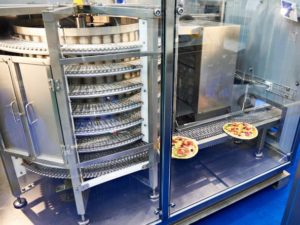
Mechanical freezers operate around -40°F(-40°C). They’re reliable workhorses, but their slower freeze rate is where problems start. Bigger ice crystals, more purge, lower yield. They also take up a lot of floor space — often three times as much as cryogenic units — and their defrost cycles can eat into production uptime. Not exactly a ringing endorsement.
Cryogenic freezers use liquid nitrogen to hit temperatures between -150°F (-101°C) and -175°F (-115°C) — and you thought critics could be cold! That rapid freeze locks in moisture, preserves texture, and produces a noticeably better finished product. They’re also significantly smaller — up to one-quarter the footprint — which is a big deal if your plant floor is already playing Tetris.
Hybrid systems combine both: A cryogenic unit rapidly seals the product first (critical for hot, high-moisture items like cooked chicken), then a mechanical freezer finishes the job. It’s the best-of-both-worlds approach for processors who need throughput without sacrificing quality.
The freezing method you choose isn’t just a refrigeration decision. It determines what your product looks like, how much of it you actually have to sell, and, critically, what your packaging has to handle.
How Does Your Freezing Method Change Your Packaging Decisions?
 Ok…this is where it gets really important for your bottom line.
A product with high purge needs packaging that can contain liquid without leaking, tearing, or giving the impression that something went terribly wrong during transit. That often means heavier, more expensive materials. You’re essentially paying more for packaging to compensate for a freezing problem.
A product frozen fast and clean? It’s stable, structurally sound, and easier to work with. You have more flexibility in your packaging choices because you’re not engineering around moisture loss. That can mean lighter materials, better presentation, and lower packaging costs per unit.
Take shrimp as an example. A fast freeze creates a tight ice glaze that makes the product look great through a clear plastic bag. That’s a selling point. A slow freeze? You can’t fix a mushy product with better plastic.
What Are the Solutions?
Paperboard cartons — the boxes wrapped around frozen meals and seafood — depend on a clean freeze, too. Too much purge and moisture works its way into the carton, turning it soft and soggy on the shelf. A soggy box tells the consumer something went wrong. A good freeze keeps the carton looking the way it should.
Vacuum packaging removes all the air and wraps the product tightly — great for meat and fish where freezer burn is a concern. But it’s brutally honest. Excess moisture has nowhere to hide, and a bag full of liquid is impossible to miss. The freeze has to be right first.
MAP (Modified Atmosphere Packaging) uses specific gases inside the package to extend shelf life and keep the package shape intact during transport — so products don’t arrive crushed. It’s a smart tool for reaching new markets or longer distribution routes. Just remember: MAP protects quality. It doesn’t fix a bad freeze. If the product went in wrong, MAP just seals the problem shut.
What Happens to Your Product After It Leaves Your Facility?
 The cold chain is where good intentions meet real-world chaos.
Temperature swings are the enemy. A product moving from a -10°F (-23.3°C) holding environment to a 25°F (-3.8°C) retail case is under real stress — and so is the plastic (or other material) surrounding it. Repeated freeze-thaw cycles cause plastic films to flex, weaken, and in some cases compromise the seal integrity that keeps the package airtight. A bag that held up leaving your dock can arrive with a weakened seal or micro-tears that affect product freshness.
Mechanical transport freezers and retail cases run defrost cycles — that’s just how they work — and those cycles affect product near the exterior of the packaging. Run a product through enough of those cycles across a long supply chain, and the quality you locked in at the freezer starts to disappear quietly.
This is why packaging material has to account for the full journey, not just the production floor. If your product is traveling farther, experiencing more temperature swings, or sitting in a retail case with an aggressive defrost cycle, your packaging needs to be durable enough to withstand it all.
Don’t Be Left in the Cold

Start with an honest look at your freeze. A process audit (something companies regularly do with processors — shout out to the ALTEC Engineering Solutions Team at Airgas) can uncover efficiency gaps that directly impact product quality and cost. Something as simple as optimizing belt loading can meaningfully reduce your cost per pound. Modern cryogenic systems also allow custom “recipes” per product type, dialing in temperature, fan speeds, and belt speeds to hit specific quality targets.
Once your freeze is dialed in, let it drive your packaging decisions, not the other way around. Choose materials that match your product’s needs and your distribution realities. Consider MAP where shelf-life extension or package integrity during transport is a priority.
The goal is simple: The quality you build on the line should be the quality that reaches the end-user. Your packaging is the last thing standing between your product and your consumer. Make sure everything leading up to it is set up to win, and don’t get stuck in the cold.
Reach out to the Airgas team at askaes@airgas.com and discover how they can help your business succeed.
Get expert insights and food packaging strategies delivered to your inbox. Subscribe now.