
At a Glance
- Freezer burn is moisture loss that damages food’s texture, flavor, and appearance.
- High-moisture foods are more vulnerable, especially during longer freezer storage.
- Packaging matters: WVTR determines how well a material keeps moisture from escaping.
- The right plastic packaging can help protect product quality and reduce freezer burn.
Freezer burn has a way of showing up at the worst possible moment — right when a shopper opens a bag of your product and finds those dry, grayish patches staring back at them like a deer in headlights. For a food business, that’s not just an unappetizing surprise. It’s a returned product, a bad review, or a person who quietly switches brands. Talk about a burn (pun intended).
To get to the bottom of this chilly problem, Inline Plastics recently interviewed Jeff Brandenburg, who founded and leads The QFresh Lab/JSB Group, LLC. Brandenburg offers exceptional insight into fresh food packaging innovation, drawing on experience in packaging technology since 1979. His expertise is complemented by his Chemical and Biomedical Engineering background, food-safety knowledge, and his dual roles as an industry consultant and university educator.
In this article, we’ll break down what’s actually happening inside that freezer bag, why some foods fall apart faster than others, and which packaging choices actually make a difference. Consider this your quick guide to keeping products fresher, consumers happier, and returns lower. Now, let’s thaw out this icy problem.
What Causes Freezer Burn?
 At its core, freezer burn is just moisture loss. Frozen food naturally holds more moisture than the air around it, and nature loves balance. So over time, that moisture migrates out of your product and into the drier air of the freezer, leaving behind the dry, discolored patches we’ve all seen that chill us to the core (we shall not stop with the puns).
Freezer burn has a cousin, too: Rancidity. Freezer burn is about moisture escaping; rancidity is about oxygen sneaking in and turning fats and oils sour. Different culprits, same lesson: Good packaging keeps the right things in and the wrong things out.
Does Freezer Burn Mean the Food Is Unsafe to Eat?
Freezer-burned food isn’t dangerous, just disappointing. The texture turns tough or leathery, and flavor takes a hit. But for a food business, “not dangerous” doesn’t pay the bills. After all, consumers expect food that looks and tastes the way it should, and freezer burn quietly chips away at that trust.
Why Do Some Foods Get Freezer Burn Faster Than Others?
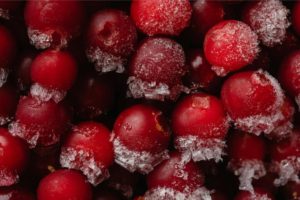 The higher a food’s moisture content, the bigger the gap between what’s inside the package and the dry air outside…and the faster that moisture heads for the exit. That’s why juicy fruits and vegetables are especially vulnerable, while drier foods hold up a bit longer.
Time works against you too. Every day a product sits in the freezer, more moisture escapes through the packaging based on that material’s water vapor transmission rate (WVTR), which measures how quickly moisture vapor passes through a packaging material. The longer the wait, the thinner the barrier between you and a complaint call.
Does a Colder Freezer Make Freezer Burn Worse?
Here’s a frosty twist: Colder air actually holds less moisture, which widens the gap between the moisture inside your package and the moisture in the air around it. That bigger gap pulls moisture out of your product even faster. So, while a colder freezer slows down spoilage in other ways, it can actually speed up freezer burn if your packaging isn’t up to the job.
Can Better Packaging Actually Prevent Freezer Burn?
Yes…and this is where the right packaging partner earns its keep. Every material has its own water vapor transmission rate, essentially a report card for how well it holds moisture in. Uncoated paper with no bag or wrap protecting the contents inside is practically an open door. Most plastics, like polyethylene, PET, and polypropylene, hold the line much better.
A few other habits make a bigger difference than most food businesses expect:
- Minimize headspace: Extra empty air inside a package gives moisture somewhere to go before it escapes entirely. A snug-fitting package keeps moisture close to the food, right where it belongs.
- Watch for pinholes: Some packaging includes tiny holes so bags can collapse for easier shipping, but every pinhole is an open invitation for moisture and oxygen to trade places.
- Guard against punctures: Frozen vegetables are surprisingly sharp, and a punctured bag undoes all your careful barrier work in an instant. Puncture-resistant film matters more than it gets credit for.
What Coatings Actually Improve Freezer Protection?
For businesses that need serious barrier performance, coatings can take a good package and make it great. EVOH is one of the more common oxygen barriers used today, having largely replaced older materials like PVDC (once known by the trade name Saran) as the industry leans toward more sustainable options.
Then there’s metallization — the process behind that shiny inner lining you’ve probably spotted in a bag of chips or a granola bar wrapper. A microscopically thin layer of vacuum-applied aluminum gets bonded to the film, dramatically boosting its moisture and light barrier without the cost or stiffness of actual foil. It’s a small technical trick with an outsized payoff for shelf life.
What’s the Best Packaging Material for Freezer Burn Prevention?
 There’s no single “best” material for every product; it depends on your food, your shelf-life needs, and your budget. But as a general rule, PET and polyethylene both perform well as moisture barriers on their own.
The real win comes from matching your packaging to your product’s specific risks: High-moisture items need a stronger vapor barrier, sharp-edged foods need puncture resistance, and long shelf lives need a tighter headspace fit. Get that match right, and freezer burn stops being a recurring cost of doing business.
Putting a Freeze on the Burn
Freezer burn is preventable, not inevitable. Once you understand the moisture, the transmission rates, and the small design choices, such as coatings, headspace, and puncture resistance, you’re equipped to make packaging decisions that protect your product all the way to the shopper’s freezer.
That’s the kind of partnership we’ve built our business on for over five decades: Helping food businesses choose packaging that keeps quality intact, consumers satisfied, and returns rare. If freezer burn has been an ongoing thorn in your side, it might be time to take a closer look at what your packaging is (and isn’t) doing for you.
Do you want to find out more about how the right packaging can improve your operation? Visit the Inline Plastics Learning Center today and explore a wide variety of topics.
Interested in learning more about The QFresh Lab/JSB Group, LLC? Visit their website or contact them directly.