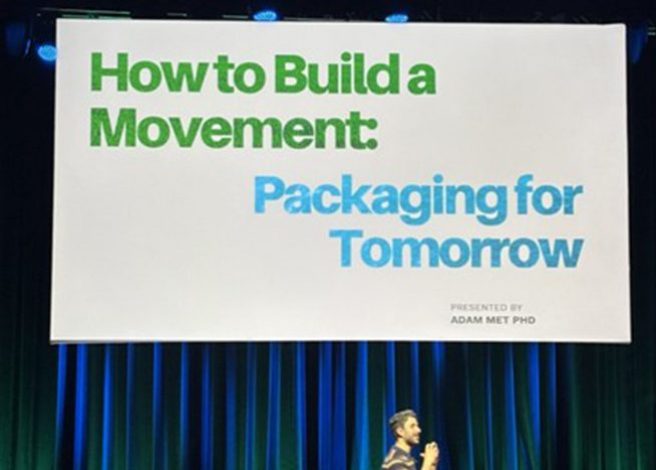
At a Glance
- Consumers are overwhelmed by sustainability messaging, and the packaging industry is realizing that confusion. Simpler, clearer communication is becoming critical.
- One of the conference’s biggest themes was shifting away from technical “green” messaging toward more human, emotional, and social-media-style communication that consumers instantly understand.
- Companies are recognizing that packaging performance still matters just as much as sustainability. Shelf life, protection, scalability, and operational efficiency remain non-negotiable.
- Regulations like California’s SB 343 and growing EPR laws are accelerating packaging decisions, pushing sustainability from a future initiative into an immediate business requirement.
Reduce. Reuse. Recycle. If only the world of food packaging and sustainability were that simple.
It’s Mark, here, again; Content Manager Extraordinaire at Inline Plastics. When I was told that the Sustainable Packaging Coalition would be hosting its annual Impact Conference in Nashville this April, I knew what I had to do: Put on my Dolly Parton backpack, grab my reusable water bottle (to avoid the horrific stares from anything deemed “single-use”), and book a plane ticket. Luckily, I had a colleague joining me this time so that we could divide and conquer the sustainability education sessions.
As a food business expert, you invest many hours perfecting recipes. You focus on presentation too, while handling logistics. Many conferences like this are difficult to attend. That’s why I’m here: To share with you the seven key takeaways I gleaned so you can be better informed for your eco-conscious consumers.
SPC Impact 2026 In an Eco-Friendly Nutshell
 If there was one thing SPC Impact 2026 made clear, it’s this: The packaging industry no longer has a sustainability problem alone. It has a communication problem.
At this year’s conference, conversations repeatedly returned to the same challenge: Consumers are overwhelmed. They’re tired of unclear environmental claims. They feel confused by recycling systems. They’re skeptical of corporate messaging and unsure which packaging info they can trust.
For food businesses, that creates a difficult reality. Even companies making legitimate investments in recyclable materials, recycled content, and packaging innovation can still struggle if consumers don’t understand what they’re looking at — or what they’re supposed to do with it.
At Inline Plastics, this shift toward simpler sustainability messaging has already shaped how we communicate with customers. Instead of creating separate “green” product lines that can confuse buyers, Inline Plastics launched its Reborn™ program in 2020 by adding 10% post-consumer recycled content across its entire PET product portfolio. The program is also third-party verified through SCS Global Services, helping give customers clearer, easier-to-understand sustainability information they can trust. And this conference was a great way to expand our resources and knowledge base for our customers.
Across keynote presentations, panel discussions, and brand showcases, SPC Impact revealed an industry trying to rethink how sustainability gets communicated in the first place.
Without further ado, let’s look at what I brought back, aside from dozens of business cards made from seed pods (I should have seen that coming).
-
The Industry Is Realizing Consumers Are Exhausted
For years, sustainability communication relied heavily on education. The methods were simple…practically formulaic. But many speakers at SPC Impact argued that approach is starting to break down.
Many presentations talked about rising public distrust in institutions. They noted a drop in confidence in corporate sustainability claims. Some speakers also mentioned what they called “climate fatigue.” Consumers are overwhelmed by environmental messages everywhere. Yet, many still wonder what’s recyclable, which claims are true, and if their actions really help.
That uncertainty creates paralysis, or rather, confusion.
Instead of engaging more deeply with sustainability messaging, many consumers are disengaging entirely.
The conference repeatedly returned to one important idea: Simplifying decisions may matter more than increasing education. That shift changes how packaging companies may need to think about communication moving forward.
-
How2Recycle’s Campaign Was One of the Most Talked-About Moments of the Conference
One presentation that generated significant attention came from John Glasgow of creative agency Vault49 during a session about How2Recycle’s newest campaign.
Rather than focusing on environmental statistics or guilt-based messaging, the campaign leaned heavily into humor, cultural references, and emotional recognition.
One slide read: “This is trash: Your ex.” Another: “This is not trash: Your BFF.”
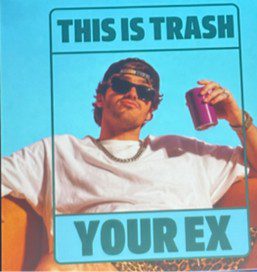

Talk about getting on the same level as the people!
Sports-themed versions featured Tennessee Titans and Baltimore Ravens mascots to reinforce recyclable versus non-recyclable packaging concepts.
The presentation intentionally avoided sounding like traditional sustainability education. Instead, it borrowed visual language and tone from meme culture, social media, and modern advertising.
The reasoning behind the campaign was straightforward: Consumers often make disposal decisions quickly and emotionally — not analytically. The campaign aimed to make recycling instructions easy to recognize. It didn’t try to turn consumers into recycling experts.
That represented a major theme throughout SPC Impact: The future of sustainability communication may depend less on explaining systems and more on reducing confusion.
-
Companies Are Starting to Treat Consumer Confusion as a Serious Business Problem
Throughout the conference, speaker after speaker highlighted how little confidence consumers have in packaging claims.
People often don’t know:
- Whether something is recyclable
- Whether their local system accepts it
- What labels actually mean
- Which sustainability claims are trustworthy
That confusion matters more than many companies once realized.
A package can technically meet recyclability guidelines, but if consumers throw it in the wrong bin, contamination increases. If consumers don’t trust the label, they may ignore it entirely. If disposal instructions are too complicated, participation drops.
The conference made it clear that technical recyclability alone is no longer enough.
Packaging communication itself is becoming part of packaging performance. So, ultimately, who is responsible for this messaging? Is it brands? Governments? Environmental watchdogs?
One thing is certain: This needs to be sorted out…and soon.
-
Sustainability Branding Is Shifting Away from “Corporate Green”
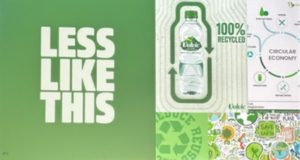 Piggybacking on How2Recycle’s campaign, multiple presentations compared older sustainability branding styles with newer communication approaches.
The “old” style featured what many in the industry would recognize immediately: Soft green color palettes, recycling arrows, circular economy diagrams, and polished corporate sustainability graphics.
The “new” direction looked completely different. We’re talking bright colors, bold graphics, and social-media-inspired visuals.
Companies are now trying to reach consumers in their own space. They focus on meeting people where they are, not forcing them to understand corporate sustainability terms.
That shift may become increasingly important as younger consumers continue shaping purchasing behavior and brand perception.
Many speakers suggested that traditional environmental messaging has become so common that consumers barely notice it anymore.
 To stand out, brands may need communication that feels more human, more direct, and easier to process instantly.
-
Sustainable Packaging Still Has to Perform
The conference featured many brands offering unique products and materials.
Many stood out, including packaging made of everything from seaweed to bacteria.
But notably, the presentations did not position sustainability as the sole selling point. The brands that caught the most attention focused on performance. Think:
- barrier protection
- shelf-life compatibility
- recyclability within existing streams
- scalability for commercial use
That approach reflected a broader reality present throughout the conference. Unfortunately, many of these fell short in the last two categories: Working with existing streams and being scalable while affordable. Something that is vital to remember is that packaging, first and foremost, has to do its job.
Food companies still need packaging to protect products, maintain freshness, survive transportation, and operate efficiently inside existing production systems. This is key. Sustainability may open the conversation, but operational performance still determines whether packaging solutions succeed in the long term.

That balance appeared repeatedly throughout SPC Impact discussions.
-
Legislation Is Changing the Pace of Packaging Decisions
Regulatory pressure was impossible to ignore throughout the conference.
Speakers referenced growing legislation tied to recyclability claims, extended producer responsibility (EPR), labeling standards, and recycled content requirements.
California’s SB 343 (the “truth in labeling law”) frequently came up in conversations about recyclability and consumer transparency. One presenter summarized the situation bluntly: Sustainable packaging is now being “required by customers and forced by legislation.”
For many companies, sustainability is no longer a future initiative sitting on a long-term roadmap. It is becoming an immediate operational requirement.
That pressure is driving discussions across the industry about packaging design, clear labeling, material options, and recovery systems.
-
The Biggest Competitive Advantage May Be Simplicity
By the end of SPC Impact 2026, one idea seemed to connect nearly every major presentation: Consumers want clear, simple messaging, not more complicated sustainability language. They don’t want longer explanations, systems, or symbols they don’t understand. Consumers just want clarity.
But what does this mean in a practical sense? We need to think about the questions consumers are asking, such as:
“Can I recycle this?”
“What bin does it go in?”
“Will my local system actually accept it?”
“Is this claim legitimate?”
The companies that answer those questions clearly may have an advantage moving forward. Because increasingly, sustainable packaging is not just about material science or environmental goals. It is about helping consumers confidently navigate a system they often find confusing.
That’s a Wrap (with Sustainable Packaging)
SPC Impact 2026 made one thing clear: The industry is no longer operating in the world it once knew — and neither are consumers.
Shoppers haven’t fallen out of love with sustainability. They’ve just grown tired of being talked at by packaging that reads like an environmental science thesis. The messaging strategies that resonated a few years ago are losing their grip, and the industry is starting to notice. Turns out, a technical breakthrough doesn’t mean much if the person standing in the grocery aisle has no idea what they’re holding.
For food packaging companies, that’s shaping up to be the real challenge ahead. Not making packaging more sustainable — many are already doing that. But making it legible to the humans actually buying the food.
A package can check every sustainability box imaginable and still leave a shopper confused about what to do with it when they’re done. The science is advancing, but the language explaining it may not always keep pace. And if consumers can’t understand it, even the most well-intentioned sustainability efforts risk falling flat at the finish line.
That being said, it was time to grab my Dolly Parton backpack and see what the future will bring, not just for the next conference, but for the world of food packaging as well.
Want to learn more about how Inline Plastics is tackling its eco-conscious initiatives head-on? Visit our sustainability page.