
Sep 04, 2026
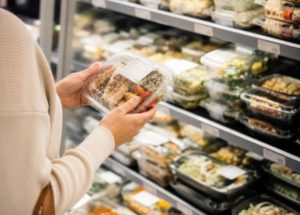
What Today’s Shoppers Really Want (And Why Your Food Packaging Matters)
At a Glance Today’s consumers are still spending, but they’re becoming far more selective, weighing convenience, quality, freshness, and perceived value before making a purchase. Convenience has shifted from a competitive advantage to a basic expectation, making durable, leak-resistant, and tamper-protected packaging more important than ever. As more shopping journeys begin online, packaging must perform […]
Read More +

Jul 06, 2026
What is California’s Assembly Bill 3336 and What Does it Mean for Food Businesses?
At a Glance California’s AB-3336 requires ready-to-eat food delivered through third-party services to be sealed with a tamper-evident method before leaving the restaurant. The goal is to protect consumers and give customers confidence that their food hasn’t been opened or altered during delivery. Common solutions include tamper-evident stickers, sealed bags, and containers with built-in tamper protection. Beyond […]
Read More +

Jun 30, 2026
The Truth About PET and OPS Pricing
At a Glance OPS may look cheaper on paper, but breakage, spoilage, and shelf-life limitations can offset its cost advantage. PET is more durable, offers better food protection, and helps reduce waste. New EPR regulations could make OPS more expensive due to low recycling value and potential fees. PET has stronger recycling infrastructure, PCR content […]
Read More +
Jun 15, 2026
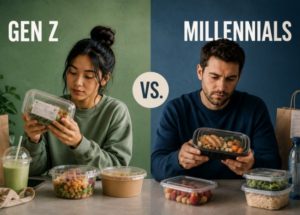
What Are the Differences in How Gen Z and Millennials View Food Packaging?
At a Glance Gen Z and Millennial packaging views prioritize sustainability, but food safety, freshness, shelf life, and convenience still come first when it comes to packaging decisions. Gen Z values transparency, sustainability, and product information. They want clear, specific claims about sourcing, ingredients, and environmental impact — not vague marketing language. Millennials tend to […]
Read More +

May 16, 2026
The Green Machine: 7 Takeaways from the Sustainable Packaging Coalition’s 2026 Impact Conference
At a Glance Consumers are overwhelmed by sustainability messaging, and the packaging industry is realizing that confusion. Simpler, clearer communication is becoming critical. One of the conference’s biggest themes was shifting away from technical “green” messaging toward more human, emotional, and social-media-style communication that consumers instantly understand. Companies are recognizing that packaging performance still matters […]
Read More +

May 13, 2026
PETs: APET, CPET, DPET, rPET, and rDPET…Oh my! What’s the Difference? Let’s Get Resin-able
At a Glance PET is the foundation of most food packaging, with APET (clear, non-crystallized) being the standard for cold and ambient applications. CPET is heat-resistant, opaque PET used for oven-ready meals, created by crystallizing APET in a one-way process. DPET is a more efficient, higher-performance version of APET made with fewer processing steps, offering […]
Read More +

Apr 24, 2026
Which Reheats Better: Food in Polypropylene or Aluminum Packaging?
At a Glance Reheating polypropylene vs aluminum: Polypropylene (PP) is microwave-safe but not oven-safe; it insulates heat, often leading to uneven heating with hot and cold spots. Aluminum conducts heat efficiently, making it ideal for ovens and delivering more even heating, better texture, and improved presentation. Microwave use with aluminum is technically possible under controlled conditions, but not recommended due […]
Read More +

Apr 10, 2026
Is Plastic Food Packaging Really the Villain the Media Makes It Out to Be?
At a Glance Plastic packaging (including plastic food packaging) is often portrayed as harmful in the media. When it comes to food packaging, we should not forget its role in environmental impact reduction by preventing food waste, a major source of emissions. Media narratives oversimplify the issue, leading businesses to make reactive, optics-driven decisions instead of data-driven […]
Read More +

Apr 09, 2026
What On-the-Go Consumers Actually Need from Packaging
At a Glance Consumer eating habits are shifting fast, and grab-and-go packaging now needs to match how people truly eat: In cars, between meetings, and on the move. Economic pressure is driving shoppers toward smaller portions, lower-cost items, and prepared meals — creating new demand for convenient, high-quality packaged options. Separate containers vs. multi-compartment trays both offer unique […]
Read More +
Mar 23, 2026
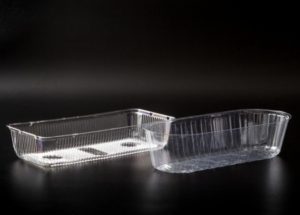
OPS vs. PET Food Packaging: Which One Actually Performs Better?
At a Glance PET is more durable and supply-chain ready — it flexes before breaking, while OPS is rigid and more prone to cracking, especially under pressure or cold conditions. Temperature performance favors PET — OPS struggles in cold and heat, while PET (and especially CPET) handles a wider range, even freezer-to-oven in some cases. Shelf life is […]
Read More +