

Mar 09, 2026
An Introduction to California’s Packaging EPR Law SB 54
DISCLAIMER: This document is designed as an introduction to California EPR laws and contains summary information. The information provided in this document does not constitute legal advice and is not a substitute for the advice of an attorney. All liability with respect to actions taken or not taken based on the contents of this document is expressly […]
Read More +

Mar 05, 2026
Premium Products Deserve Premium Packaging. Period.
At a Glance Premium products are judged in seconds, and packaging plays a huge role in whether shoppers perceive quality before they ever taste the food. Weak or damaged packaging undermines trust, value, and shelf appeal — even when the product inside is excellent. Container integrity, clarity, and merchandising directly impact food safety, shelf life, and consumer […]
Read More +

Feb 26, 2026
How Is the Rise of GLP-1 Usage Affecting Food Packaging?
At a Glance GLP-1 use is driving smaller portions and higher demand for protein, fresh, and functional foods. Multi-serve packaging is declining; single-serve and portion-controlled formats are growing. Health-focused buyers also expect clear labeling and sustainable packaging. Distributors and retailers must pivot formats, diversify categories, and align with wellness trends to stay competitive. If you’re in the […]
Read More +

Feb 19, 2026
What Are the Key Challenges in the Current Foodservice Industry?
At a Glance: Foodservice challenges: Rising labor (+30%) and food costs (+36%) are crushing margins. Sector differences: Sit-down, grab-and-go, and delivery each face unique pressures. Efficiency focus: Streamlined menus, tech tools, and prepped ingredients cut costs. Smart packaging: Treat packaging as branding and invest where performance matters. Since early 2020 (you know, when that little thing called COVID-19 came to our […]
Read More +

Feb 11, 2026
How Can I Use Packaging to Make My Product Stand Out?
At a Glance Packaging differentiation comes from performance — leak resistance, durability, clarity, safety, and shelf-life protection — not just eye-catching design. Brands often make costly mistakes chasing creative shapes or cheaper options that leak, pop open, or create labor and customer service issues. The winning formula blends functionality with creativity: Test small, ensure the package […]
Read More +
Feb 06, 2026
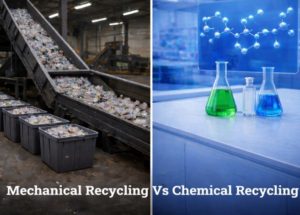
Chemical vs. Mechanical Recycling Explained
At a Glance Chemical vs. mechanical recycling is a growing point of confusion in food packaging, with major differences in cost, performance, and how materials are processed back into usable forms. Mechanical recycling is established and more affordable, but material quality degrades with each cycle, often requiring design or material adjustments. Chemical recycling can return plastics to near-virgin […]
Read More +

Feb 06, 2026
EPR Fees and Food Packaging: What You Need to Know Before Costs Jump
At a Glance EPR fees are unavoidable: If you sell food in packaging, you’ll help fund recycling systems — and costs change based on material type, weight, and recyclability. Packaging choices affect the bill: Single-material, recyclable packaging and recycled content can lower fees; mixed or hard-to-recycle materials raise them. This is a planning issue, not just […]
Read More +

Jan 30, 2026
rPET Food Packaging: What Food Businesses Need to Know Beyond the Sustainability Hype
At a Glance rPET in food packaging is in high demand, but supply can’t keep up — creating cost premiums, regulatory considerations, and sourcing challenges for food businesses. U.S. collection rates remain low for recyclable plastics, driving shortages and limiting how much recycled content brands can realistically use. Although rPET costs more than virgin PET, it can meet FDA food-grade safety standards when properly […]
Read More +
Jan 26, 2026
Will Reuse Programs Work in Grocery Stores? Here’s What Food Retailers Need to Know
At a Glance Reuse programs sound promising, but most struggle in grocery retail due to heavier containers, higher transportation costs, added labor, and increased food safety and liability risks. Reuse works best in closed, controlled environments (cafeterias, stadiums, campuses) or very specific product categories, not across full grocery assortments. Consumer participation and convenience remain major barriers — […]
Read More +

Jan 23, 2026
How to Build an Effective Food Safety Program
At a Glance Food safety failures often come from small sanitation gaps, not lack of effort, and one pathogen event can undo years of trust and investment. Using sanitation zones helps facilities prioritize risk, focusing the most rigorous cleaning where food contact actually occurs. Dry cleaning strategies reduce pathogen spread by limiting moisture, which can otherwise reactivate and […]
Read More +