At a Glance
- Hybrid meals are becoming the new normal, blending prepared foods with homemade ingredients.
- Prepared foods are now meal components, not just complete meals.
- Protein leads the trend because it saves the most time and effort.
- Packaging must support multiple meals with resealable, reusable designs.
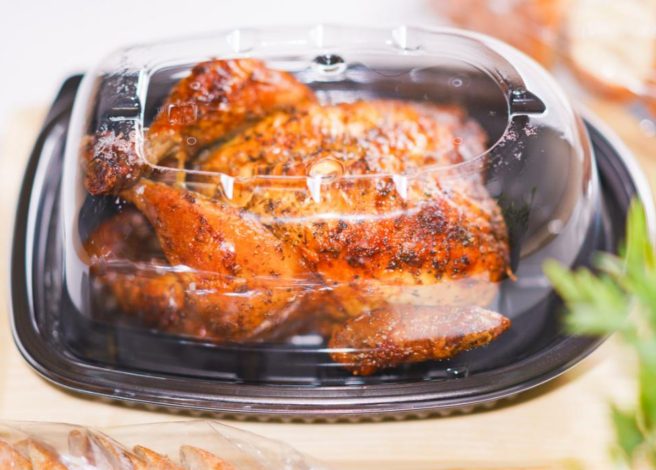
Let’s say you grab a hot rotisserie chicken from a grocery store, throw together a quick salad, maybe some steamed carrots, and call it a day. Congratulations, my friend, you just built a hybrid meal…and so did roughly half of America last night, fancy name or not.
Fresh food professionals have watched this behavior creep into carts for years. Shoppers buy the hard part, make the easy part, and call it homemade.
The problem: Some prepared-foods packaging still assumes one purchase equals one sitting and done. That’s not how people eat anymore. Someone’s counting on that container for tonight’s dinner and for holding tomorrow’s lunch, too. And if it can’t handle the second act, that’s on you, not them.
Inline Plastics recently sat down with Suzy Badaracco, Founder and President of Culinary Tides, a fractional foresight and trend intelligence team that specializes in identifying emerging trends and predicting their trajectories. See the end of the article for her bio and contact information. Her insights aligned with what we’ve been seeing after more than 55 years in the fresh food industry: This isn’t a passing fad. It’s a shift worth paying attention to.
Here’s what’s ahead: What a hybrid meal is, why shoppers are behaving this way, what it means for merchandising, and where packaging earns its keep.
What Are Hybrid Meals, Exactly?
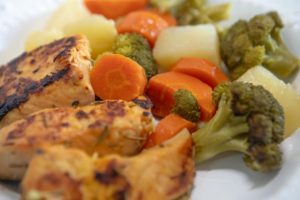 It’s pretty easy to understand. A hybrid meal is one prepared item plus one or two homemade items, put together and served as a breakfast, lunch, or dinner. Think deli-prepared meatloaf with homemade vegetables, or a prepared soup next to a homemade salad. It’s not a recipe; it’s a truce between the store and the stove. And for goodness’ sake, does it make life easier for busy folks!
Badaracco puts it simply: “Hybrid meals aren’t about replacing cooking; they’re about changing how people cook.” Shoppers are juggling time fatigue, tighter budgets, and what researchers politely call “decision overload” (it’s one of those things that you’ve felt but didn’t know what it was called). Consumers make many food-related decisions a day. Hybrid meals shave that number down without kicking the metaphorical cook out of the kitchen entirely.
Why Are Shoppers Cooking Differently Instead of Cooking Less?
Here’s the part that trips people up. It looks like plain old convenience-seeking, but the real driver is more subtle: Shoppers aren’t avoiding cooking; they’re avoiding starting over from zero, night after night.
Every from-scratch meal drags along its own parade of planning, shopping, prepping, and cleanup. Do that seven times a week, and you get decision fatigue. So instead of seven unrelated dinners, shoppers stretch one cooking event across several — roast a chicken on Sunday, turn it into tacos on Monday, and wraps on Tuesday. Same effort, three dinners…BOOM! It’s less meal planning and more meal recycling, and nobody’s mad about it.
Home cooking is still a regular part of life for most Americans. According to the International Food Information Council’s 2025 Food & Health Survey, 87% of Americans cook at home at least once a week, showing that preparing meals remains an important part of how people eat. Hybrid meals let shoppers keep the “I made this” glow while skipping the steps that actually wear them down.
What Does This Mean for Prepared Foods and Merchandising?
 The ask from shoppers has quietly flipped from “make dinner for me” to “help me make dinner easier.” Small phrase, big difference for anyone merchandising deli, meat, or grab-and-go.
Instead of treating prepared foods as a finish line, there’s an opening to treat it as a starting lineup — proteins, globally inspired sides, sauces, and vegetable blends shoppers can mix and match with whatever’s already loitering in their fridge. A pulled-pork tray stops being just tonight’s dinner and becomes tomorrow’s tacos and next day’s wraps. A grain salad becomes somebody’s protein bowl base. Circana found that 36% of dinners now include at least one heat-and-eat item, highlighting the growing role of prepared foods in everyday meals.
Why Has Protein Become the Anchor of the Hybrid Meal?
Protein keeps landing at the center of this trend, and it’s not a coincidence. It’s usually the most expensive, time-consuming, and intimidating thing on the plate, and for good reason. It’s the part most likely to go sideways if you wing it. Handing shoppers a cooked rotisserie chicken, steak tips, or grilled salmon solves the scary part first, so they can play around with everything else, like sauces, sides, seasoning, or decorating the tablescape to match an 80s-themed dinner party…whatever mood strikes (but really, consider the 80s party and make Cyndi Lauper proud).
Protein also pulls double duty on value and health. One prepared protein can anchor three meals across a week, which is basically a magic trick for budget-conscious shoppers. And with protein riding high as one of the strongest health cues on the shelf, it lets people feel smart about a shortcut rather than sheepish.
How Should Packaging Support This Shift?
 This is where things get relevant to anyone specifying containers, films, or trays: Packaging is quietly becoming part of the meal instead of just something wrapped around it.
When a shopper buys a prepared protein planning to stretch it across three meals, the packaging needs to keep pace — resealable, easy to portion, able to survive fridge-to-reheat without falling apart at the seams. A container built for exactly one use is working against the very behavior it’s supposed to support.
There’s a merchandising angle in here too. Packaging that whispers “eat me tonight and forget me tomorrow” isn’t doing you any favors. Packaging built for round two and three is a different story. Multiple compartments, a portion-friendly design, and a lid that actually stays on? Ding, ding, ding! We have a winner! Little things like that get shoppers picturing three meals instead of one before they’ve even left the store. A small design choice can be a big deal for repeat trips to that store.
Where Does This Leave Fresh Food Businesses?
The real opportunity isn’t selling more finished meals. It’s helping shoppers figure out what else tonight’s purchase can become tomorrow. Flexible, mix-and-match components help. Packaging that can actually pull off an encore helps more. Nail both, and you stop being a pit stop on the way home from work, but you become part of someone’s whole week, and how fabulous is that?
Hybrid meals aren’t going anywhere. This is just how people cook now, and packaging is stuck holding the bag, sometimes literally. So before you sign off on the next container order, ask whether it can actually survive a second meal. Your shoppers already expect that it will.
Interested in finding out more about packaging trends? Visit the Inline Plastics Learning Center today and explore a wide range of topics.
Suzy Badaracco Bio:
Suzy Badaracco, President of Culinary Tides, Inc., is a foresight expert with over 21 years of experience in trends intelligence and predictive forecasting. She holds a Bachelor of Science degree in Criminalistics, an Associate degree in Culinary Arts, and a Master of Science degree in Human Nutrition. Suzy’s expertise is further enhanced by her training in military intelligence, Chaos theory, and predictive analysis techniques.
Under her leadership, Culinary Tides, Inc. has become a premier consultancy in the food industry, renownedingd for its ability to accurately predict and profile trends across various domains, including food, beverage, consumer behavior, health, government, and technology. The firm specializes in identifying the birth, origin, trajectory, and longevity of trends, enabling food industry partners to strategically navigate the market. By revealing relevant patterns, Culinary Tides, Inc. empowers clients to develop products that resonate with customers, creating effective entrance, navigation, and exit strategies. Suzy Badaracco’s insights and innovative methodologies have established her as a leading figure in foresight and trend forecasting.
Email: sbadaracco@culinarytides.com
Website: www.culinarytides.com
LinkedIn https://www.linkedin.com/in/suzy-badaracco-7443144/
Youtube: https://www.youtube.com/channel/UCoLQOIVuKBxIEshiLj5xkXg
Instagram: https://www.instagram.com/sbadaracco/