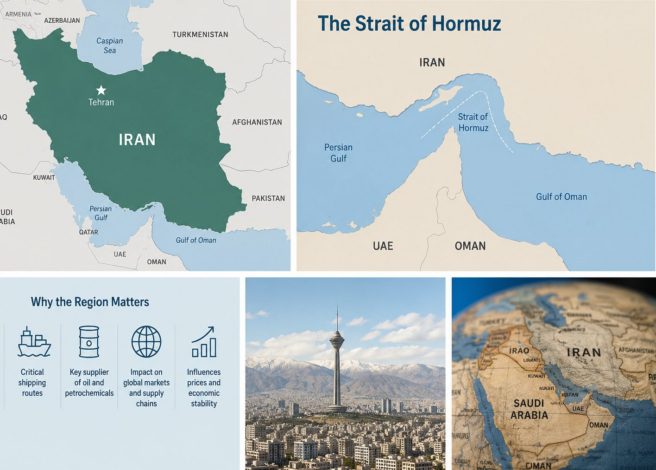
Listen to the audio recording of this blog post or check out the featured Podcast about this topic.
At a Glance
- The Iran conflict is still affecting plastic food packaging through resin volatility, freight disruption, and supply chain uncertainty.
- Packaging companies are increasing safety stock, adjusting sourcing strategies, and preparing for prolonged instability rather than a quick recovery.
- Even if the conflict ended tomorrow, ripple effects tied to energy prices, shipping, and petrochemical infrastructure could continue affecting packaging markets for months to come.
- Food businesses should focus on supplier communication, inventory planning, and packaging decisions that balance cost, availability, and operational efficiency.
If you buy, source, or rely on plastic food packaging, the conflict in Iran is more than a headline. Packaging markets are still reacting to instability across energy, petrochemicals, and transportation — creating continued uncertainty around resin costs, freight, supply continuity, and long-term planning.
Oil prices jumped. Shipping lanes tightened. Resin markets reacted almost overnight.
Today, we see a shift from a quick disruption to a wider supply chain issue. This challenge still impacts packaging makers, food companies, and retailers.
We do not say this to cause any panic. While that mindset may seem natural, rest assured that we are here to provide guidance based on objective facts.
At Inline Plastics, we’ve seen how global disruptions can quickly reshape packaging markets. While we are not economists or geopolitical experts, we closely monitor how changes in resin, energy, and logistics markets affect food packaging availability and pricing.
In this article, we’ll break down what has changed since the conflict began, how plastic food packaging continues to be affected, and why some ripple effects could continue for several months — even if the conflict ended tomorrow.
Resin Markets Are Still Feeling Pressure
 One of the clearest ongoing effects of the conflict remains resin pricing.
PE (polyethylene), PP (polypropylene), and PET (polyethylene terephthalate) all experienced upward pricing pressure throughout the spring.
Industry packaging and petrochemical updates throughout Q2 2026 showed polyethylene prices surge after major global capacity disruptions, while polypropylene producers increasingly redirected volumes toward export markets to capitalize on stronger margins. According to publicly available data from ICIS, PET markets also tightened as reduced Asian import activity into North America left supply constrained.
Shipping disruptions in the Strait of Hormuz, a key energy route, are still impacting global petrochemical flows.
S&P Global recently reported that many chemical producers remain hesitant to move vessels through the region despite partial reopening efforts, with companies increasingly rerouting cargo and reassessing long-term supply strategies.
That hesitation is important. Petrochemicals are involved in almost all plastic packaging used in the food industry.
When feedstocks become more difficult or expensive to move, the cost pressure eventually reaches thermoformers, converters, distributors, and ultimately food businesses.
That uncertainty puts food business operators in a tough spot. They must balance inventory, pricing, labor, and customer expectations simultaneously.
This does not necessarily mean packaging shortages are imminent, but it does mean volatility remains elevated.
Packaging Companies Are Preparing for Prolonged Uncertainty
Aptar stated during its Q1 2026 earnings call that it is intentionally increasing safety stock levels while closely monitoring supplier stability due to rising energy costs and longer-term supply concerns.
Huhtamäki described the current environment as “month-to-month work now,” explaining that suppliers themselves are struggling to forecast and allocate material volumes over longer periods.
Meanwhile, International Paper cited ongoing pressure from energy costs and described conditions as especially difficult for higher-cost producers.
For food businesses, that matters because supplier behavior directly affects packaging availability, lead times, and pricing predictability.
These comments reinforce an important point: The industry is not operating as if the disruption will end soon.
Instead, many companies are actively restructuring inventory practices, sourcing strategies, and customer pricing models in anticipation of instability persisting through the remainder of 2026.
Freight and Logistics Are Becoming Bigger Parts of the Conversation
 The conflict’s impact is not limited to resin.
Freight, insurance, vessel routing, and transportation costs are all contributing to broader packaging inflation.
Wood Mackenzie recently noted that restricted vessel movement through the Strait of Hormuz continues to disrupt chemicals, polymers, and petrochemical trade flows globally. At the same time, freight rates and insurance premiums remain elevated.
The International Energy Agency has also warned that the conflict created one of the largest oil market disruptions in modern history, with global inventories tightening and shipping flows significantly reduced earlier this year.
For food packaging buyers, higher freight costs can quietly reshape total packaging economics.
Even if resin prices stabilize temporarily, transportation costs can continue to push costs higher across the supply chain.
That is especially important for packaging formats that rely heavily on imported resin, additives, films, labels, or other specialty materials.
It also increases the importance of domestic manufacturing capacity and regional sourcing flexibility.
Why Food Businesses Should Expect Ripple Effects Into Coming Months — Or Longer
One of the biggest misconceptions about geopolitical disruptions is the assumption that markets quickly return to normal once conflict de-escalates.
For food businesses, that assumption can lead to dangerous planning decisions regarding inventory, forecasting, promotions, and packaging sourcing.
That is rarely how industrial supply chains work.
Even if tensions eased immediately, several factors would continue affecting plastic food packaging markets.
Petrochemical Infrastructure Takes Time to Restart
 Facilities do not simply switch back on overnight.
Analysts from ICIS and Wood Mackenzie have warned that damage to Middle East petrochemical and energy infrastructure, combined with ongoing feedstock and shipping disruptions, could continue affecting global markets well beyond the initial conflict period.
Restarting production safely requires inspections, labor coordination, logistics alignment, feedstock availability, and shipping capacity. That process can take weeks or months.
Inventory Systems Are Already Changing
Many packaging companies are intentionally carrying higher inventory levels to protect against future disruption.
That changes purchasing behavior across the supply chain.
Companies buying additional safety stock today may continue purchasing conservatively well after conditions stabilize. Others may delay purchases temporarily while waiting for pricing clarity. Both behaviors can create uneven demand swings.
Freight Networks Remain Disrupted After Conflicts End
Shipping systems do not instantly rebalance. Ports, vessel schedules, container availability, insurance structures, and freight routing often remain distorted long after geopolitical events cool.
The International Monetary Fund recently warned that even after transit resumes, higher risk premiums and uncertainty may continue to suppress investment and slow growth.
Energy Inflation Affects Nearly Every Packaging Input
Plastic packaging depends heavily on energy-intensive processes.
Resin production, thermoforming, transportation, warehousing, refrigeration, and distribution all carry energy exposure.
Even moderate energy inflation can continue to affect packaging economics in future quarters.
Consumers Are Still Focused on Value — And Packaging Still Matters
 At the same time, many food businesses are continuing to navigate cautious consumer spending.
That matters because packaging still plays a major role in food protection, transportation, shelf life, and product presentation.
Businesses need to control costs, but they also require packaging that protects quality. Good packaging supports transportation and helps products stand out on shelves.
As a result, many food businesses continue to balance short-term pricing pressure with longer-term concerns about supply consistency and operational reliability.
A Plan for Food Businesses Navigating Packaging Uncertainty
Food businesses can’t control global conflicts, energy markets, or resin prices. But they can be proactive with their packaging choices.
Here is a simple-to-modest plan:
-
Review What Packaging You Rely on Most
Identify the packaging types you need most. This includes containers, lids, trays, films, and more.
Focus on the items that would create the biggest disruption if costs changed, lead times shifted, or availability tightened.
-
Talk with Your Packaging Supplier Before There Is a Problem
Ask about current lead times, resin exposure, supply flexibility, and whether any products may be more vulnerable to market volatility.
These conversations are easier to manage before a shortage, price increase, or ordering delay happens.
-
Build Packaging Decisions Around Total Value, Not Only Unit Price
When markets are unstable, the lowest unit price may not always create the lowest total cost.
Effective packaging protects shelf life and reduces product damage. It also supports labor efficiency and enhances food presentation. This adds value, even when budgets are tight.
-
Stay Flexible as Conditions Change
The situation remains fluid. Resin prices, freight costs, import availability, and customer demand can shift quickly.
Food businesses that stay close to their suppliers and check packaging needs frequently will be ready to adapt if conditions keep changing.
The Packaging Industry Is Adjusting — Not Panicking
 Importantly, most packaging companies are not describing a collapse in demand. Instead, the tone across earnings calls and industry updates has been one of anticipation and adjusting accordingly.
Companies are adapting. Some are implementing price increases. Others are diversifying sourcing. Many are emphasizing operational flexibility, localized manufacturing, and inventory discipline. And several continue reporting stable or improving demand across food-related categories.
That distinction matters.
The conflict has not stopped the food packaging industry. It has pushed food businesses to be more proactive, flexible, and strategic in managing packaging supply. It has made supply chain reliability, sourcing strategy, and pricing predictability much more vital.
For food businesses, processors, retailers, and distributors, the takeaway is increasingly clear: The impact of this conflict is no longer just about headlines overseas.
It is now embedded in the economics and logistics of how plastic food packaging moves through the global market.
Remember, you’re not alone in this. At Inline Plastics, we help food businesses see how market changes can impact packaging. This way, they can make smart choices rather than just react.
If you have concerns about how this conflict could affect your business, reach out to a dedicated Inline Plastics advisor today.